
Horse mushroom
Agaricus arvensis
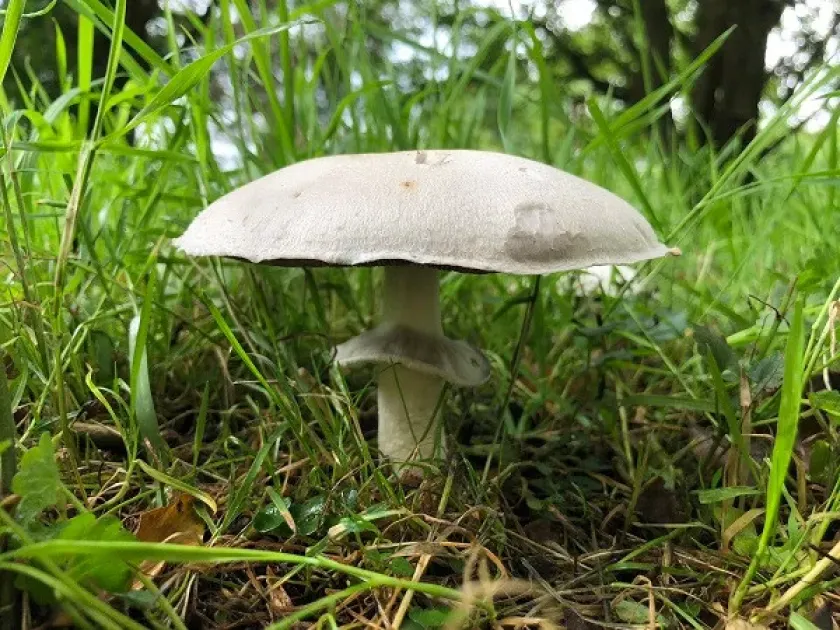
Description
Pathogen
The Agaricus arvensis, commonly known as the horse mushroom, is not a plant pathogen and does not cause diseases in agricultural crops.
It belongs to the saprotrophic fungi group, which means it obtains nutrients by breaking down organic matter in the soil, such as decaying plant debris and manure.
Although it appears in fields and pastures, it has no parasitic relationship with crops; it does not infect plant tissues, roots, or foliage.
The classification of this mushroom as a disease is a common misunderstanding linked to the development of its mycelium in the form of fairy rings.
As a biological agent, it contributes to the ecosystem by recycling nutrients, making them available for plants after the decomposition process is complete.
Conditions for development
Horse mushrooms thrive in environments rich in organic matter, such as pastures treated with manure or fields with high compost content.
High soil moisture and moderate temperatures are critical factors that trigger the development of the mycelium and the subsequent growth of fruiting bodies.
These fungi prefer well-aerated soils and are often found in areas that have not been recently deep-plowed, allowing the fungal network to expand.
The presence of nitrogen-rich compounds in the soil acts as a growth stimulant for the mycelium, often leading to distinct circular patterns.
Neutral to slightly alkaline pH levels are generally considered the most favorable conditions for the widespread colonization of Agaricus arvensis.
Why it matters
The horse mushroom poses no significant threat to agricultural production as it does not compete for nutrients with crops in an aggressive manner.
In rare instances, the dense mycelium mat in the soil can alter local water permeability, causing slight issues with soil moisture consistency for seeds.
The competition for space is negligible, and there are no reports of negative impacts on the yield or health of standard field crops.
The presence of this mushroom is generally viewed as an indicator of healthy, nutrient-rich soil rather than a symptom of a pathology.
Therefore, farmers do not suffer economic losses directly attributable to the presence of horse mushrooms in their cultivated fields.
Protection
Because the horse mushroom is not a plant disease, there is no need for chemical fungicides or specialized treatment protocols.
Standard agronomic practices, such as deep plowing and cultivation, are highly effective at disrupting the fungal mycelium network.
Proper management of organic manure application ensures that concentrations of organic material do not become excessively localized.
Improving drainage systems to prevent waterlogging helps create conditions less suited for the prolific growth of saprotrophic fungi.
If physical removal is required for field maintenance, manual collection of fruiting bodies or soil aeration is sufficient to mitigate their occurrence.
Discussion
No discussions yet — be the first.