
Yellow-staining mushroom
Agaricus abruptibulbus
Description
Symptoms
The Yellow-staining mushroom (Agaricus abruptibulbus) is a saprotrophic fungus that frequently appears in managed landscapes, often acting as a competitor in garden beds.
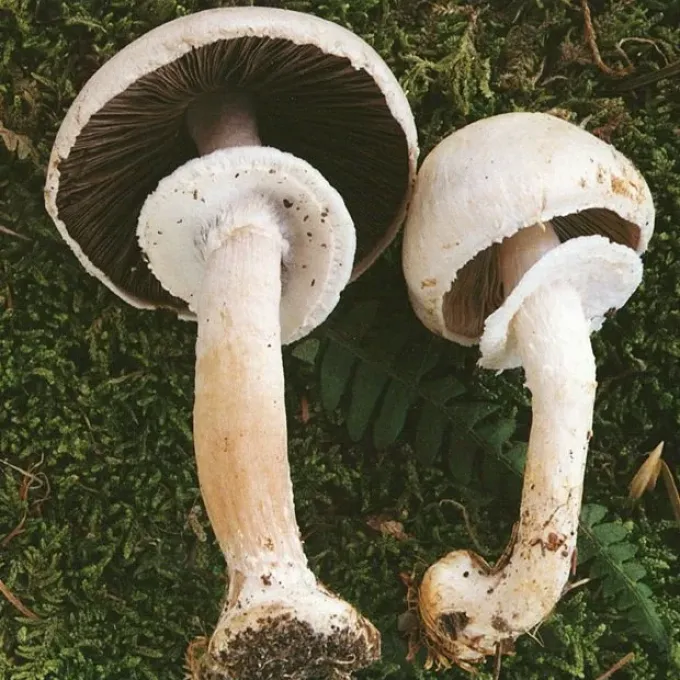
The most reliable field sign is the intense yellow staining that occurs when the flesh is bruised or cut, particularly at the base of the stem, which identifies the species clearly.
The mushroom features a distinct, abrupt, bulbous base at the bottom of the stem, which is a structural characteristic that differentiates it from similar-looking edible species.
When crushed, the mushroom releases a strong, unpleasant chemical odor reminiscent of phenol or carbolic acid, which serves as an immediate warning sign.
The cap is typically white in young specimens but may develop a yellowish or brownish tint as it matures, with gills that progress from white to dark brown.
Pathogen
The causative agent is the basidiomycete fungus Agaricus abruptibulbus, a soil-dwelling saprotroph that thrives on decaying organic material.
While not a primary plant pathogen, it competes aggressively with cultivated plants and beneficial soil microflora for space, water, and essential nutrients.
The fungus reproduces via basidiospores, which disperse readily through wind and water, allowing the pathogen to colonize new areas in garden beds and greenhouses.
The mycelium grows vigorously through the topsoil or organic substrates, decomposing complex organic compounds into simpler forms.
Its presence is often a biological indicator of high organic content in the soil that has not been sufficiently decomposed or stabilized.
Conditions for development
Agaricus abruptibulbus thrives in environments with high humidity and rich organic humus, conditions that are often maintained for vegetable and greenhouse production.
Optimal growth temperatures range between 15°C and 22°C, with damp, well-aerated soil surfaces providing the ideal habitat for fruit body formation.
The addition of non-composted manure provides an ideal nutrient source, triggering the germination of dormant spores and the rapid spread of the fungal network.
Dense vegetation or excessive mulching can create a stagnant microclimate that encourages the fungus to spread across garden beds.
The species prefers neutral to slightly alkaline soil conditions, which perfectly align with the typical requirements for most agricultural and garden crops.
Why it matters
The primary harm is the inhibition of crop growth due to the aggressive exploitation of soil resources, depriving vegetables of required mineral uptake.
Metabolites released by the mushroom, specifically phenolic compounds, can be phytotoxic to the root systems of sensitive plant species nearby.
In commercial mushroom cultivation, contamination by this species is catastrophic, as it lowers product quality and threatens the safety of the entire harvest.
Its presence complicates agronomic maintenance, requiring extra labor and chemical measures to remove the fungal infestation from growing areas.
The species is toxic to humans and can cause severe gastrointestinal issues, making it a significant safety hazard in home gardens and public spaces.
Protection
Prevention focuses on the strict sterilization of growing media and the use of fully matured, high-quality compost to eliminate the risk of spore introduction.
Adequate soil management, including consistent aeration and drainage, is crucial to prevent the moist conditions that favor the fungus's development.
- Prompt removal of fruiting bodies to prevent the maturation and release of spores.
- Regular cultivation of soil to disrupt the development of subsurface mycelium.
- Controlled watering to avoid excessive moisture in the topsoil layer.
- Strategic use of agricultural fungicides where heavy soil infestation is present.
Maintaining sanitary perimeters around greenhouses and growing beds is essential for preventing the ingress of spores from wild habitats.
For persistent outbreaks, the total replacement of the topsoil layer followed by local disinfection is the most effective eradication method.
Discussion
No discussions yet — be the first.