
Agaricostilbomycetes
Agaricostilbomycetes
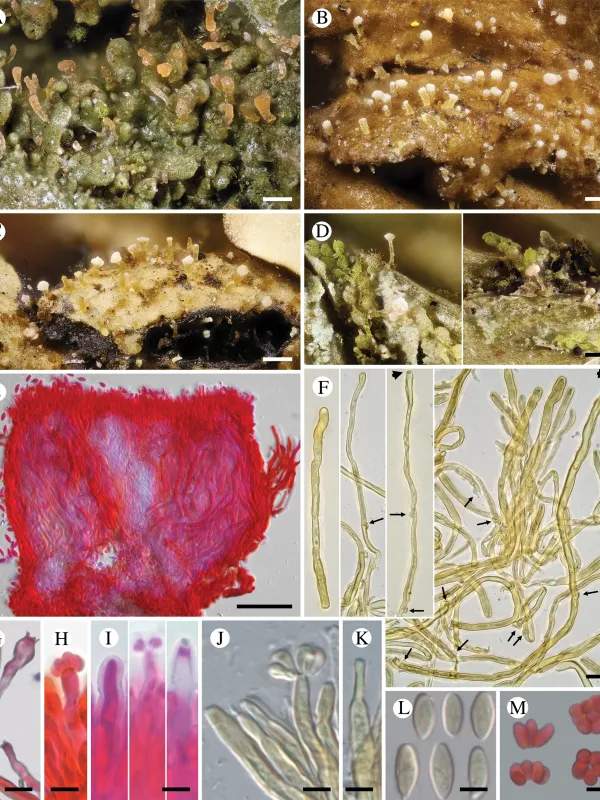
Description
Pathogen
The class Agaricostilbomycetes consists of diverse basidiomycete fungi that occupy specific ecological niches. While they are not classified as primary crop pathogens, many species interact with plants through complex relationships, including hyperparasitism on other fungi.
These organisms are characterized by the production of stilbelloid conidiomata, which serve as dispersal structures. Their life cycle often requires specific hosts or substrates, making them highly specialized within the mycological landscape.
Taxonomically, they belong to the Pucciniomycotina subphylum. Recent molecular research has clarified their evolutionary position, distinguishing them from typical agricultural blight-causing pathogens.
From an agronomic perspective, their presence is often associated with the breakdown of organic matter. They play a functional role in nutrient cycling, but under specific stress conditions, they may colonize weakened plant tissues.
Biological studies suggest that these fungi are sensitive to environmental variations. Their ability to survive depends heavily on their capacity to form dormant structures when environmental resources are scarce.
Conditions for development
Environmental conditions characterized by high humidity are essential for the survival and spread of Agaricostilbomycetes. Moisture levels in the soil or on plant surfaces directly influence the activity of their mycelia.
Optimal temperatures for most species fall between 18 and 25 degrees Celsius. Extreme temperatures outside this range significantly reduce metabolic processes and limit the production of reproductive spores.
Dense crop canopies and poor air circulation are contributing factors that favor the accumulation of fungal propagules. Such environments provide a stable microclimate that protects them from drying out.
The availability of substrate is a fundamental prerequisite for their distribution. Accumulations of leaf litter, crop debris, and existing fungal colonies serve as primary sources for infection spread.
Wind-driven dispersal of spores and mechanical transfer by insects are the primary pathways for spreading within agricultural fields. These factors make control challenging in environments with high insect activity.
Protection
Effective management begins with strict agricultural hygiene. Removing infected plant materials and crop residues eliminates the nutrient base necessary for the proliferation of these fungi.
Improving field aeration through optimized planting distances is a primary preventive measure. A well-ventilated crop environment dries out rapidly, making it hostile to fungal growth and spore germination.
While targeted chemical control for this class is rarely prioritized, general-purpose fungicides used against other fungal diseases contribute to the suppression of Agaricostilbomycetes populations.
Enhancing soil health and promoting beneficial soil microflora can competitively exclude opportunistic fungi. This biological control strategy is essential for sustainable crop production systems.
Monitoring for signs of disease and keeping fields free from standing water help mitigate the risks of fungal proliferation. Maintaining appropriate irrigation schedules is key to ensuring that surface moisture does not remain for extended periods.
Discussion
No discussions yet — be the first.