
Aecidial stage of rust
Aecidium
Description
Symptoms
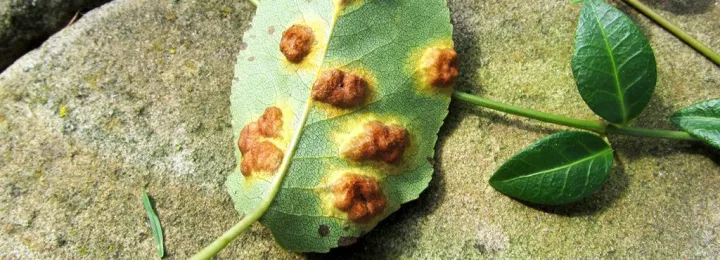
The primary symptom of the aecidial stage is the appearance of localized spots that eventually develop into protruding pustules on leaves, petioles, or stems.
These pustules, known as aecia, often display vibrant yellow, orange, or reddish hues. Upon maturity, the protective outer layer ruptures, releasing a powdery mass of aeciospores.
Infected plant tissues frequently exhibit signs of deformation, such as curling of leaves, twisting of stems, or stunted growth in young shoots.
Surrounding the infection site, chlorotic halos may appear as the fungus depletes nutrients and disrupts the normal physiological functions of the leaf tissue.
- Presence of bright orange or yellow cup-shaped fruiting bodies.
- Powdery spore mass visible on leaves and stems.
- Deformation and twisting of young plant parts.
- Localized chlorosis and premature tissue death.
Pathogen
The aecidial stage represents a critical phase in the life cycle of rust fungi (order Pucciniales), involving the production of specialized fruiting bodies known as aecia.
These fungi are obligate parasites that exhibit host specificity, often requiring two different plant species to complete their complex life cycle.
During this phase, the fungus produces aeciospores within the aecia. These spores are highly efficient at dispersing and infecting the primary plant hosts during the spring months.
The transition between different spore types and host plants allows the pathogen to survive diverse environmental conditions and spread rapidly across agricultural landscapes.
The morphology of the aecidium is typically cup-shaped, erupting through the host epidermis to release masses of spores, which are often bright in color.
Conditions for development
Optimal development of the aecidial stage occurs in cool and moist conditions, which are typical for the early part of the growing season.
Free water (such as dew or light rain) on the plant surface is essential for the germination of basidiospores, which eventually lead to the formation of the aecidial stage.
Temperatures ranging from 12 to 18 degrees Celsius provide the ideal thermal environment for the rapid maturation of aecia and spore release.
High plant density and poor air circulation create a conducive microclimate that promotes the accumulation of inoculum and enhances the rate of infection.
The proximity of alternate hosts, such as common barberry or other specific shrub species, is the most significant factor in initiating large-scale outbreaks.
Why it matters
The aecidial stage acts as a primary source of inoculum, initiating the infection cycle that can lead to devastating rust epidemics in major crop fields.
By hijacking the host's nutritional resources, the pathogen causes significant stress, leading to reduced photosynthetic capacity and diminished overall yield.
Severe infections disrupt the vascular system and metabolic pathways of the plant, leaving it more vulnerable to secondary pathogens and abiotic stresses.
The reduction in quality and visual appeal of crops leads to substantial economic losses, especially for fruit, vegetable, and ornamental growers.
Long-term colonization by rust fungi can weaken perennial plants, reducing their winter hardiness and impacting their productivity for subsequent growing seasons.
Protection
The most effective long-term control strategy is the eradication of alternate host plants near agricultural production areas to break the disease life cycle.
Systemic fungicides, when applied during early infection stages, effectively prevent the development of mycelia and stop the spread of secondary spores.
Adopting robust crop rotation practices and sanitizing fields by removing infected plant debris helps to decrease the overwintering population of the pathogen.
Utilizing resistant crop varieties remains the most sustainable and cost-effective approach to minimize the impact of rust diseases in modern farming.
Regular field scouting allows for early detection of the aecidial stage, enabling targeted interventions that prevent the disease from reaching epidemic proportions.
Discussion
No discussions yet — be the first.