
Actinomycosis of plants
Actinomycetaceae
Description
Symptoms
The main symptom of the infection is the appearance of specific growths, ulcers, or pustules on the surface of underground plant organs. Affected tissues often acquire a dark color and a characteristic putrid odor.
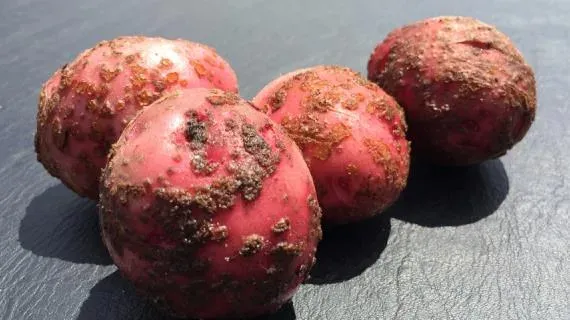
When tubers, such as potatoes or beets, are affected, the formation of deep or superficial ulcers with uneven edges is observed. In some cases, the affected surface is covered with a coating consisting of bacterial mycelium.
The appearance of infected plants changes: stunting, yellowing, and premature wilting of leaves are observed. In case of severe damage, the root system may rot, leading to the death of the plant.
On cross-sections of affected areas, one can often notice a change in the color of vascular bundles and tissue necrosis. In humid weather, secondary infections may develop on damaged areas, accelerating the rotting process.
A characteristic sign is the presence of powdery masses on the surface of pathological tissues, representing the sporulation of actinomycetes. This allows for easy identification of the pathogen through microscopic analysis.
Pathogen
The causative agents of the disease are actinomycetes, a group of Gram-positive bacteria belonging to the Actinomycetaceae family, often referred to as ray fungi. These microorganisms occupy an intermediate position between true bacteria and fungi.
Actinomycetes have the ability to form a branched mycelium, which accounts for their original name. In the soil environment, they mainly lead a saprotrophic lifestyle, participating in the decomposition of organic residues and humus formation.
Pathogenic forms of actinomycetes are capable of affecting the root system, bulbs, and tubers of various agricultural crops. They penetrate plant tissues through micro-traumas, cracks, and natural openings in the epidermis.
Bacteria of this type are characterized by high resistance to adverse environmental factors due to their ability to form spores. This allows them to persist in the soil for a long time even in the absence of a host plant.
The type of disease is classified as a bacterial infection of the root system or tubers, often accompanied by decay and disruption of the normal metabolism of plant tissues.
Conditions for development
Development of actinomycosis is promoted by alkaline or neutral soils with low moisture content. High soil temperatures during the summer period significantly increase the activity of the pathogen and the rate of infection development.
The presence of fresh manure or a large amount of undecomposed plant residues in the soil stimulates the reproduction of actinomycete populations. The infection pressure increases sharply with continuous monocropping of susceptible plants on the same field.
Mechanical damage to root crops or roots during agricultural operations creates "infection gates" for bacteria. Plants weakened by stress factors become more vulnerable to pathogen penetration.
The lack of proper crop rotation leads to the accumulation of high titers of actinomycetes in the soil layer. This makes it impossible to obtain a healthy harvest without the application of serious protective measures.
Improper irrigation regimes, leading to alternating drought and sudden soil saturation, also create favorable conditions for plant colonization by actinomycetes.
Why it matters
The harmfulness of actinomycosis lies in a significant reduction in the market quality of the harvest, making the produce unsuitable for long-term storage. Affected tubers and root crops rot rapidly in storage facilities.
The infection leads to a decrease in overall yield, as affected plants cannot fully support the formation of vegetative and reproductive mass. Root suppression reduces the efficiency of nutrient uptake.
Affected produce loses its taste and nutritional value, becoming unsuitable for retail sale. The presence of pathogens requires additional costs for sorting and discarding diseased produce.
Economic losses consist of costs for storage fumigation and the need for expensive soil remediation. Crop infection can lead to the complete rejection of entire harvest batches.
The spread of infection in the field complicates the subsequent use of the land, requiring long-term quarantine or the selection of resistant varieties, which limits the choice of crops.
Protection
The main method of control is crop rotation, returning susceptible crops to the same location no sooner than 4–5 years later. This allows for a significant reduction in the infectious potential of the soil.
Liming acidic soils should be done with caution, as an excessive increase in pH to alkaline values favors the development of actinomycosis. It is recommended to maintain an optimal soil solution reaction.
Only healthy, certified planting material that has undergone preliminary disinfection should be used. It is important to minimize any damage to root crops during harvesting and transportation.
The use of green manure crops and the application of balanced mineral fertilizers helps to improve soil microflora, suppressing the activity of pathogenic bacteria. Healthy soil is a natural barrier to infection.
- Adherence to storage regimes (low temperatures, ventilation).
- Use of resistant varieties and hybrids.
- Removal and destruction of all plant residues after harvest.
- Disinfection of storage facilities and containers before storing produce.
Discussion
No discussions yet — be the first.