
Actinomycosis
Actinomyces bovis
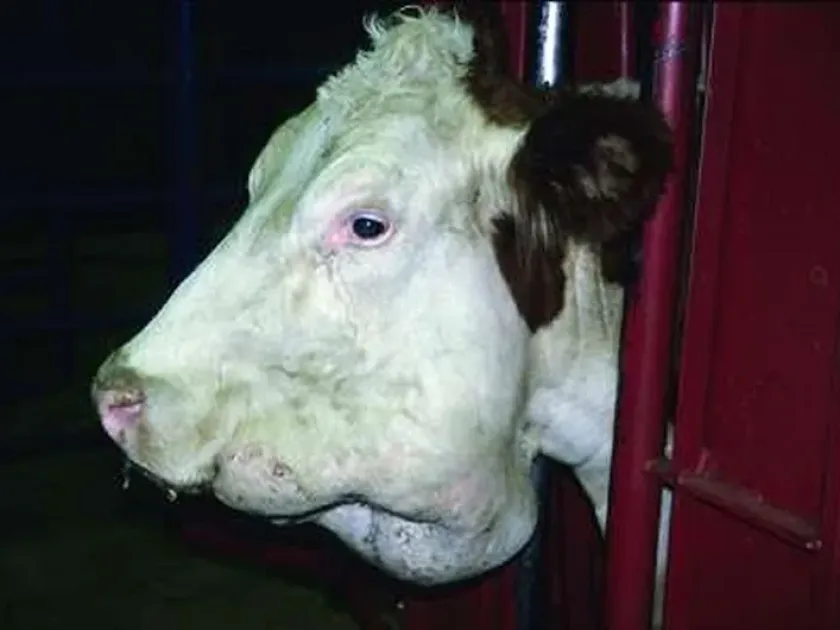
Description
Symptoms
The classic presentation of actinomycosis is the development of firm, painless swellings, particularly around the jawbone, often referred to as "lumpy jaw." These masses gradually expand and become hard.
As the granulomas enlarge, they may rupture, forming draining tracts or fistulas. These openings discharge a thick, sticky, yellowish-white pus containing gritty granules, which are the hallmark diagnostic sign of the infection.
Bone involvement is very common; the infection invades the mandible or maxilla, causing extensive bone resorption and proliferation. This leads to severe facial deformity and can result in loose or missing teeth.
Animals with advanced lumpy jaw often struggle to chew, swallow, or breathe, depending on the location and size of the lesions. This directly impacts their ability to maintain normal weight and nutritional status.
In systemic cases, the infection can involve the lymph nodes of the head and neck. These nodes become enlarged, hard, and nodular, further complicating the animal's physical comfort and overall health status.
Pathogen
The causative agent of actinomycosis is Actinomyces bovis, a gram-positive, anaerobic bacterium that naturally inhabits the mucous membranes of the mouth and digestive tract in cattle.
Although historically referred to as a "ray fungus" due to its filamentous structure, the pathogen is biologically classified as a bacterium. It forms complex colonial structures known as "sulfur granules" or "drusen" within infected tissues.
The organism is an opportunistic pathogen that thrives in environments with low oxygen levels. It can survive in soil, bedding, and damp forage for extended periods, making environmental hygiene critical for control.
Infection occurs primarily when the bacterium gains access to underlying tissues through mechanical injuries. These lesions are typically caused by coarse forage, thorny plants, or foreign objects that penetrate the oral mucosa or skin.
Once inside the tissue, the bacteria trigger a chronic inflammatory response, leading to the formation of dense fibrous capsules known as granulomas, which encapsulate the bacterial colonies.
Conditions for development
Environmental triggers for actinomycosis are heavily linked to nutrition and feeding practices. Diets consisting of hard, lignified hay or forage with sharp awns increase the risk of oral trauma.
Poor sanitation within barns and grazing areas promotes the survival of Actinomyces bovis. High humidity and damp, dirty bedding serve as excellent reservoirs for the bacteria to thrive.
The immune status of the herd plays a major role; cattle suffering from mineral deficiencies or malnutrition are significantly more susceptible to bacterial invasion following minor oral lesions.
Seasonality also impacts the prevalence, with higher risks observed during winter feeding periods when cattle are restricted to stall diets that may contain coarser, potentially abrasive dry forage.
Overcrowded conditions and shared feeding equipment facilitate the transmission of the bacteria from an infected animal's discharge to the healthy members of the herd.
Why it matters
The economic impact is significant due to reduced weight gain, decreased milk production, and the potential for premature culling of high-value livestock. Treatment is often prolonged and costly.
Animals with severe jaw involvement often cannot process their feed efficiently. This leads to rapid weight loss and nutritional stress, which renders the animal unproductive and prone to secondary health issues.
The presence of discharging fistulas is both unsightly and a source of environmental contamination, requiring the isolation of the animal from the healthy herd to prevent the spread of the pathogen.
If the infection extends into the respiratory or digestive tracts, the prognosis becomes poor. In such cases, the animal may eventually fail to thrive, necessitating humane euthanasia for animal welfare reasons.
Strict meat inspection regulations often lead to the condemnation of affected carcasses, resulting in direct financial losses for the producer if the disease is not detected and managed early.
Protection
Effective control requires vigilant monitoring of the herd for early signs of oral swellings. Inspecting the mouths of cattle regularly helps detect lesions before they become deep-seated granulomas.
Treatment protocols typically involve the use of antibiotics, such as penicillin or tetracyclines, and iodine compounds, which are effective in inhibiting the growth of Actinomyces bovis.
Prevention relies on improving forage quality. Avoiding feed that contains sharp stalks, coarse straw, or prickly weeds minimizes the risk of mechanical damage to the oral mucosa.
Good farm hygiene is essential; cleaning and disinfecting feeding bunks and stalls regularly reduces the load of bacteria in the animal's immediate environment.
Maintaining a balanced diet with proper mineral supplementation ensures that the mucous membranes remain healthy and resilient against infection, ultimately reducing the incidence of lumpy jaw.
Discussion
No discussions yet — be the first.