
Actinomycosis of plants
Actinomyces
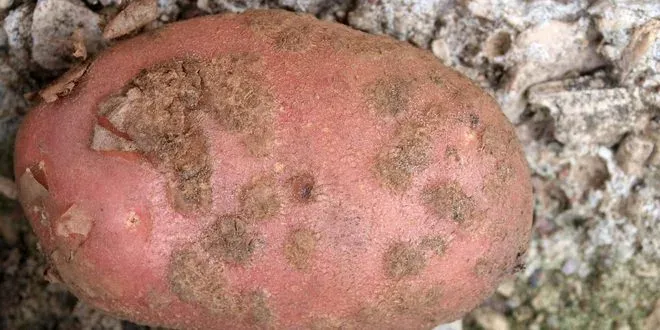
Description
Symptoms
The primary indicators of actinomycosis include the development of localized necrotic lesions on roots, bulbs, and tubers. Affected tissues often lose their firmness and develop a characteristic brown or grey discoloration.
As the infection progresses, the tissues may become soft, pulpy, or mushy, sometimes emitting a distinct odor due to the involvement of secondary rot-causing bacteria.
Above-ground symptoms are typically non-specific, manifesting as stunted growth, yellowing (chlorosis) of foliage, and reduced vigor, which reflect the impairment of the plant's root system.
Under high humidity, a thin, white, or greyish-white mycelial mat may appear on the surface of the infected organs, representing the sporulation phase of the actinomycetes.
In severe cases, the entire root architecture can be destroyed, leading to the rapid wilting and premature death of the affected plant.
Pathogen
The causative agents of actinomycosis in plants are actinomycetes, a group of Gram-positive bacteria that possess filamentous branching structures resembling fungal mycelia. Historically, this structural similarity led to confusion in their taxonomic classification.
These microorganisms are ubiquitous in soil environments, where they typically function as saprophytes, breaking down complex organic matter. However, under favorable environmental conditions, they can act as opportunistic pathogens.
Actinomycetes thrive in various soil types and are known for their resilience. They can persist in the soil for extended periods, even in the absence of a host, by forming resilient spores or remaining in a dormant state.
Pathogenic strains infect plants by penetrating tissue through natural openings or physical wounds in the root system or lower stems, initiating a slow but destructive infection process.
The biological nature of these bacteria allows them to interact with other soil microflora, often creating synergistic complexes that aggravate the severity of plant diseases.
Conditions for development
Excessive soil moisture and poor drainage are the most critical factors promoting the development of actinomycosis. Waterlogged soils create an anaerobic environment that weakens plant immunity.
Soil chemistry, particularly pH levels, plays a significant role in the prevalence of these pathogens. While they are adaptable, certain pH fluctuations can favor their rapid colonization of host tissues.
The continuous cropping of susceptible plant species on the same ground leads to a massive accumulation of inoculum, significantly increasing the probability of disease outbreaks.
High soil temperatures, generally between 20°C and 28°C, accelerate the metabolic and reproductive rates of the bacteria, leading to more aggressive tissue colonization during the peak growing season.
Mechanical damage caused by pests or cultivation implements provides easy access for the bacteria, significantly increasing the incidence of infection in high-intensity farming systems.
Why it matters
The economic impact of actinomycosis is largely attributed to the degradation of harvested produce. Infected tubers and roots are prone to rapid decay in storage, resulting in substantial post-harvest losses.
The disease reduces crop stands by causing seedling death, which leads to uneven plant density and decreased total yields per hectare.
By compromising the root system, the pathogen limits nutrient and water uptake, which predisposes the plants to secondary infections and environmental stress.
The disease makes the management of agricultural land more difficult and expensive, necessitating strict sanitation practices and frequent rotation to prevent total loss of crop viability.
Losses also extend to the loss of seed material value, as contaminated seeds or bulbs can serve as a primary source for the further dissemination of the pathogen.
Protection
Effective management relies on a multi-faceted approach, starting with long-term crop rotation to exhaust the pathogen's food source in the soil. Avoiding susceptible species for several seasons is crucial.
Improving soil structure through proper tillage and the addition of organic amendments (well-decomposed compost) helps foster beneficial microflora that can outcompete actinomycetes.
Sanitation practices, including the removal and destruction of crop residues, are vital to preventing the buildup of inoculum in the field.
- Adjusting soil pH to optimal levels
- Using certified disease-free planting material
- Enhancing soil aeration and drainage
- Applying biological agents like Trichoderma species
- Utilizing bactericidal seed treatments
When chemical intervention is required, specialized soil fungicides or bactericides may be applied as a preventive measure during the pre-planting phase to minimize early-season infection pressure.
Discussion
No discussions yet — be the first.