
Actinobacteriosis
Actinobacteria
Description
Symptoms
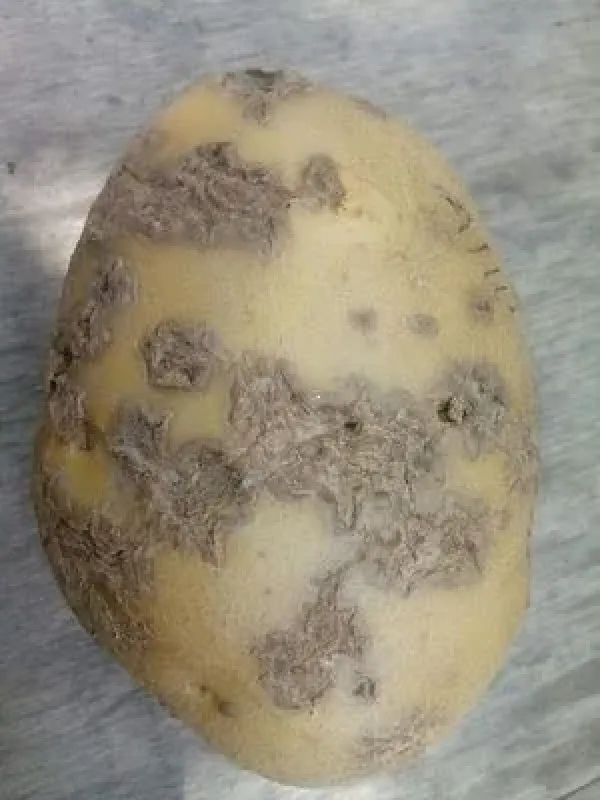
The most common symptom of actinobacteriosis is the development of scab on tubers and root vegetables. Lesions appear on the surface, which can be flat, deep, or raised, often resembling corky growths.
Infected areas often exhibit a rough or cracked texture. As the disease progresses, these lesions can expand and merge, significantly compromising the exterior quality and market value of the harvested produce.
On young plants, the disease may manifest as stunted root development. A weakened root system directly impacts the plant's ability to absorb water and essential nutrients, leading to poor overall growth.
Stems and leaf stalks may show brownish necrotic spots. Under high humidity, these areas may become soft, and if the infection becomes systemic, the entire plant may exhibit signs of chlorosis and premature wilting.
Severe infestations lead to a noticeable decline in plant vitality. In many cases, infected plants shed their lower leaves early, and the entire growth cycle is significantly shortened, resulting in reduced yields.
Pathogen
The disease is caused by soil-borne actinobacteria, primarily belonging to the Streptomyces genus. These are Gram-positive microorganisms that exhibit morphological characteristics intermediate between bacteria and fungi.
These pathogens generally live as saprotrophs in the soil, utilizing organic matter as a food source. However, under favorable environmental conditions, they can act as parasites, infecting the tissues of various agricultural crops.
Actinobacteria are known for their remarkable resilience. They can survive for long periods in soil by forming spores or dense mycelial networks, allowing them to withstand drought and harsh environmental conditions.
The spread of the pathogen typically occurs through contaminated soil, infected seed material, and farm machinery that hasn't been disinfected. Wind and water erosion can also transport soil particles containing these bacteria.
The bacteria secrete specialized enzymes capable of breaking down plant cell walls. This enzymatic activity is the primary mechanism behind the tissue destruction and the formation of characteristic lesions observed in infected plants.
Conditions for development
The development of the disease is heavily dependent on soil pH. Actinobacteria thrive in neutral to slightly alkaline soils (pH 6.5–8.0), making fields with high lime content particularly susceptible to outbreaks.
Optimal conditions for pathogen activity include warm soil temperatures (25–30°C) and moderate moisture levels. Conversely, highly acidic soil environments often naturally inhibit the growth of these bacteria.
Poor crop rotation practices play a major role in the buildup of the disease. Repeatedly planting susceptible crops in the same field leads to an accumulation of inoculum, making it difficult to maintain healthy crops.
A lack of organic matter and poor soil structure can make plants more susceptible to infection. Plants weakened by nutrient deficiencies are less capable of defending themselves against the initial bacterial invasion.
High levels of undecomposed crop residues in the soil provide an excellent nutrient source for the bacteria during the off-season, ensuring the pathogen persists and increases in the soil population.
Why it matters
The primary damage caused by actinobacteriosis is the severe depreciation of product quality. Scabby tubers and roots are often rejected by consumers, leading to significant financial losses for producers.
Infected produce has a poor storage life. The lesions act as entry points for secondary fungi and soft-rot bacteria, which can destroy entire storage bins during the winter months.
Commercial plantations can lose a substantial percentage of their total yield. In seasons with favorable weather for the pathogen, yield losses can be extensive, reaching up to 50% of the harvest.
The disease also poses a long-term threat to farm operations by contaminating the soil. Once established in a field, it becomes a permanent issue that requires rigorous and costly management techniques to control.
Indirect harm stems from the increased expenditure required for soil treatment, selection of resistant varieties, and ongoing monitoring of fields to prevent the disease from spreading to clean areas.
Protection
Implementing a diverse crop rotation is a primary defense strategy. Rotating with crops that acidify the soil or have antagonistic properties against the pathogen helps to reduce the bacterial population.
Choosing resistant cultivars is the most effective way to manage the disease. Breeding programs continue to release varieties that are specifically tolerant to scab, even in fields with a history of infection.
Managing soil chemistry by applying physiologically acidic fertilizers, such as ammonium sulfate, can create a local environment in the root zone that is unfavorable for the development of actinobacteria.
Proper irrigation management is essential to avoid extreme fluctuations in soil moisture, which can cause skin cracking in tubers and provide an easy entry point for the pathogen during the growth stage.
- Disinfecting all storage facilities and equipment between seasons.
- Using biological seed treatments to protect young plants during emergence.
- Conducting soil tests to monitor pathogen levels and adjust agricultural practices accordingly.
Discussion
No discussions yet — be the first.