
Acrocordia gemmata
Acrocordia gemmata
Description
Symptoms
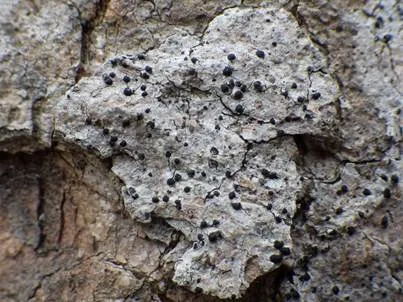
The primary visual signs include thin, greyish to greenish crust-like patches on the bark. The thallus is typically smooth and closely appressed to the bark, making it difficult to detect at a distance.
A distinct feature is the presence of small, kidney-shaped or bump-like fruiting bodies called perithecia. These look like tiny buds protruding slightly from the surface, which is the origin of its scientific name.
The lichen does not cause bark discoloration, rotting, or lesions. It typically maintains a texture similar to the natural bark surface, which it adheres to without causing physical damage.
The lichen is most visible during wet weather when the thallus hydrates and appears more vibrant. In dry conditions, it shrinks and becomes nearly indistinguishable from the color of the bark.
Upon physical scraping, the lichen detaches easily, revealing healthy, undamaged bark beneath. This is a clear indicator that the organism is only a surface dweller.
Pathogen
Acrocordia gemmata is a species of crustose lichen, not a pathogenic plant disease. It is a symbiotic organism consisting of a fungus and algae, and it lives on the surface of bark rather than infecting the plant tissues.
As an epiphyte, it uses the tree bark exclusively as a substrate for attachment. It does not penetrate the cambium or wood, nor does it consume the tree's nutrients or vascular fluids.
Biologically, it belongs to the group of lichenized fungi. Its presence is generally considered an indicator of good air quality, as it is sensitive to atmospheric pollution, particularly sulfur dioxide.
The organism grows as a thin crust on the tree trunk. Because it relies on its own photosynthesis and airborne moisture/nutrients, it has no direct nutritional relationship with the host tree.
It is important for gardeners to distinguish between this harmless lichen and true fungal diseases like cankers, as their management strategies and impact on tree longevity are entirely different.
Conditions for development
Humidity is the most important factor for the development of Acrocordia gemmata. It thrives in shaded environments where bark remains damp for long periods, preventing rapid drying.
Poor orchard ventilation due to dense canopy growth creates a stagnant microclimate that encourages lichen colonization. Rough-barked trees are particularly susceptible as they retain moisture effectively.
Air quality is a crucial environmental factor. Its presence indicates a relatively healthy environment, as it is known to be intolerant of high pollution levels in urban or industrial settings.
The organism is well-adapted to the temperate climate. It exhibits broad tolerance for temperature fluctuations, entering a state of dormancy during extreme heat or freezing conditions.
Light levels influence the photosynthetic algae within the lichen. Consequently, it is most often found on the northern, shaded sides of trunks where the light is less intense and evaporation is lower.
Why it matters
Acrocordia gemmata causes no direct harm to the tree's health. It does not extract water or minerals from the host, and it does not produce harmful substances that inhibit tree growth.
However, excessive growth on young or thin-barked trees may slightly restrict bark gas exchange. While not typically lethal, this can potentially impede physiological breathing processes in small saplings.
The primary concern is that a thick layer of lichen can provide an ideal shelter for overwintering pests, such as aphids, mites, and scale insects, which hide beneath the crust for protection.
Lichen coverage can also harbor spores of actual pathogenic fungi. These secondary pathogens may find a stable moisture niche within the lichen thallus, leading to eventual bark infections.
From an aesthetic and horticultural perspective, high coverage of lichens is often perceived as a sign of poor tree maintenance and aging, even if the tree itself is physiologically healthy.
Protection
The most effective long-term strategy is canopy management. Pruning improves sunlight penetration and airflow, which naturally discourages lichen growth by keeping the bark dry.
Mechanical removal is a simple and effective control method. Scraping the bark with a stiff wooden or plastic brush removes the lichen without harming the living bark tissue.
Application of lime wash to the trunks is a classic prophylactic treatment. The high pH of the lime creates an alkaline surface that prevents lichen spores from establishing a foothold.
A solution of 3-5% ferrous sulfate is commonly used as a chemical treatment to clean trunks. It is effective at killing lichen while being relatively safe for the tree when applied during dormancy.
- Prune tree crowns to improve light and air circulation
- Remove lichens manually during the dormant season
- Apply lime-based whitewash to tree trunks
- Improve overall tree vigor through proper fertilization
- Monitor for pests that might use lichen as a breeding ground
Discussion
No discussions yet — be the first.