
Acinetobacter infection
Acinetobacter
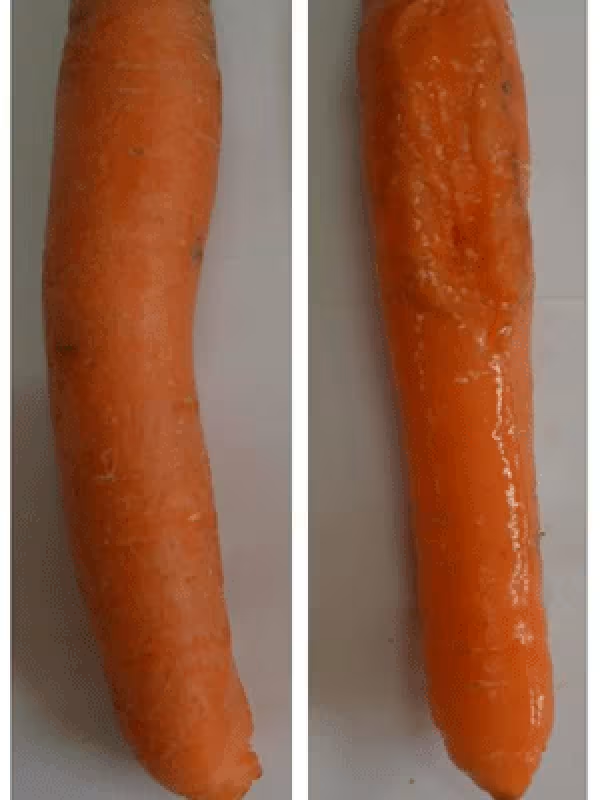
Description
Symptoms
Initial symptoms of Acinetobacter infection manifest as chlorotic spots on leaves, which gradually become necrotic. Tissues in affected areas often become water-soaked and lose their structural integrity.
When stems are affected, a characteristic darkening of the vascular bundles is observed, leading to wilting of specific plant parts or the entire aerial mass. Under high humidity conditions, a bacterial exudate may appear on the surface of affected areas.
One of the key signs is the development of rot, which gradually encompasses stems or fruits, turning them into a soft, foul-smelling mass. In some crops, deformation of young leaves and stunted growth are observed.
Disease progression is often accompanied by the appearance of oily spots surrounded by a narrow yellow halo. These symptoms progress rapidly in hot weather, especially when liquid moisture is present on the leaf blade.
- Yellowing of leaf margins
- Softening of tissues in affected organs
- Darkening of vascular bundles
- Presence of bacterial plaque or exudate
- Premature dropping of leaves and fruits
Pathogen
The causative agent of the disease is a bacterium of the genus Acinetobacter, belonging to the Moraxellaceae family. These are Gram-negative, non-spore-forming, non-motile coccobacilli capable of surviving in diverse ecological niches.
In phytopathology, this genus is often regarded as an opportunistic pathogen or a component of bacterial complexes. The bacteria colonize the plant vascular system and tissues, utilizing enzymatic mechanisms to degrade cell walls.
A biological feature of the species is high genome plasticity, which allows the bacteria to adapt to various substrates. In agroecosystems, they can be transmitted both mechanically and through sap-sucking insect vectors.
The infection process begins with the entry of the microorganism through natural openings (stomata, hydathodes) or mechanical tissue damage. Rapid multiplication in the intercellular space leads to disruption of plant metabolism.
It is important to note that Acinetobacter species often appear in association with other phytopathogenic bacteria, such as Erwinia or Pseudomonas, which significantly complicates accurate field diagnosis.
Conditions for development
The development of Acinetobacter infection is favored by high relative humidity, exceeding 80 percent. Bacteria multiply actively at moderately high temperatures ranging from 20 to 28 degrees Celsius.
The presence of liquid moisture on the plant surface is a critical factor, as it serves as a medium for the spread of bacterial cells. Overhead irrigation, fog, and heavy dew create ideal conditions for the onset of an epiphytotic.
Dense plantings and poor ventilation in greenhouses contribute to the accumulation of the pathogen. Poor soil aeration and waterlogging of the root system further weaken plant immunity, making them more susceptible.
Poor agricultural practices, including imbalanced nitrogen fertilization, stimulate rapid vegetative growth, which is softer and more easily penetrated by bacteria. High nitrogen levels reduce the overall resistance of crops.
Sharp temperature fluctuations between day and night can lead to condensation, which also triggers outbreaks of infection in protected environments. The sanitary state of tools plays a vital role in the spread of the bacteriosis.
Why it matters
The harmfulness of Acinetobacter infection lies in the sharp reduction of crop yield and the degradation of the quality of agricultural produce. The infection can destroy 30 to 50 percent of the harvest in the absence of timely intervention.
Damage to fruits makes them unsuitable for long-term storage and transportation, as initial rot foci quickly turn the produce into biological waste. The disease also causes mass mortality of seedlings in nurseries.
Systemic damage to the vascular system leads to inhibition of photosynthesis, preventing the plant from developing properly and forming healthy reproductive organs. This results in significant reductions in fruit mass and overall marketability.
Infected plots become a source of primary inoculum for neighboring plants, which, under favorable conditions, leads to the rapid spread of the disease across the entire field or greenhouse block.
Economic losses also include costs associated with protection measures, chemical treatments, and the necessity of disposing of infected plant parts or entire batches of produce.
Protection
The basis of protection is strict adherence to crop rotation, which prevents the accumulation of the pathogen in the soil. It is recommended to return crops to the same location no sooner than 3–4 years later.
The use of resistant cultivars and hybrids is the most effective prevention strategy. Planting must be performed only with healthy, calibrated seed material that has undergone disinfection.
During the growing season, it is necessary to control insect pests promptly, as they act as mechanical vectors of the infection. It is also important to maintain optimal plant density to ensure proper airflow.
Copper-based preparations and biological bactericides capable of suppressing the pathogen population are used to combat the disease. Chemical protection should be applied preventively before the appearance of mass symptoms.
An important step is the disinfection of tools, containers, and greenhouse structures after the end of the season. Plant debris must be removed from the field and destroyed, as bacteria can persist in them until the next cycle.
Discussion
No discussions yet — be the first.