
Bacterial wilt of anthurium
Acidovorax anthurii
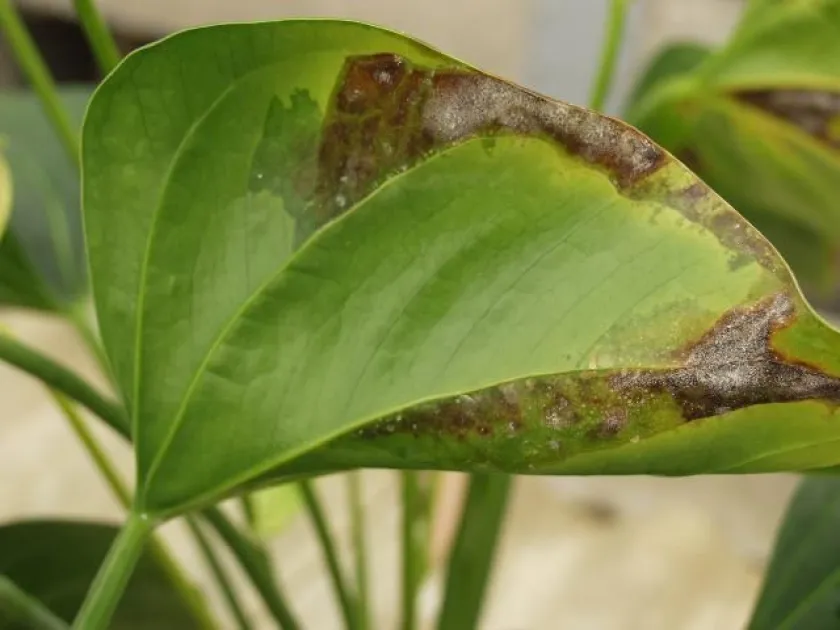
Description
Symptoms
Initial symptoms include the appearance of small, water-soaked spots on the foliage that gradually darken and become surrounded by a chlorotic halo.
As the disease progresses, the plant exhibits signs of wilting that do not recover with watering, indicating internal blockage of the vascular tissues.
Cross-sections of the petioles or stems often reveal a dark discoloration of the vascular bundles, which is a diagnostic indicator of the bacterial infection.
Under conditions of high humidity, a bacterial ooze or slime may be observed on the surface of the infected lesions or at the site of cut stems.
Eventually, the leaves turn necrotic, the plant loses its vitality, and total collapse occurs due to the systemic nature of the infection.
Pathogen
The causal agent of bacterial wilt in anthurium is the gram-negative bacterium Acidovorax anthurii (formerly classified as Pseudomonas anthurii).
This pathogen specifically attacks members of the Araceae family, targeting the vascular system to disrupt the plant's nutrient and water transport.
The bacteria colonize the xylem, producing polysaccharides that clog the vessels, which leads to the visible wilting of the leaves and stems.
Acidovorax anthurii is highly contagious and can be transmitted through infected water, contaminated soil, or unsterilized gardening tools.
The persistence of the bacteria in plant debris and the growing substrate makes it a challenging pathogen to eradicate once it is established.
Conditions for development
Optimal environmental conditions for the spread of Acidovorax anthurii include high humidity levels and warm temperatures ranging from 22°C to 28°C.
Over-irrigation and waterlogged substrates create a stress-induced environment that significantly increases susceptibility to bacterial infiltration.
Poor air circulation within the greenhouse or indoor space promotes the retention of moisture on the leaves, favoring bacterial entry through stomata.
Mechanical injuries resulting from pruning, repotting, or insect feeding serve as primary entry points for the pathogen into the plant tissue.
Inadequate sanitation practices, such as using unsterilized equipment, contribute heavily to the rapid horizontal spread of the disease between plants.
Why it matters
Bacterial wilt is highly destructive and considered a lethal disease for anthuriums, as there is no effective cure for systemically infected plants.
The infection can rapidly sweep through a greenhouse collection, causing significant economic losses and requiring the disposal of infected stocks.
The pathogen's ability to remain dormant in the soil or greenhouse benches makes it a persistent threat that can return after re-planting.
Damage is not limited to the foliage but extends to the roots and flower stems, rendering the entire plant unfit for aesthetic or commercial purposes.
Early-stage detection is difficult because the plant may appear healthy while already harboring the pathogen, leading to unintentional transmission.
Protection
Rigorous phytosanitary measures are the most effective way to manage the disease, starting with the immediate removal of symptomatic plants.
All gardening tools must be disinfected with a strong alcohol solution or appropriate chemical disinfectant between every single plant contact.
Maintaining a balanced irrigation schedule and improving ventilation are crucial to prevent the accumulation of moisture that supports bacterial growth.
Avoid overhead watering to minimize the splashing of bacteria onto healthy leaves and to keep the foliage dry as much as possible.
New plants should be quarantined for a significant period before being introduced into an established collection to prevent the accidental entry of the pathogen.
Discussion
No discussions yet — be the first.