
Acidovorax
Acidovorax
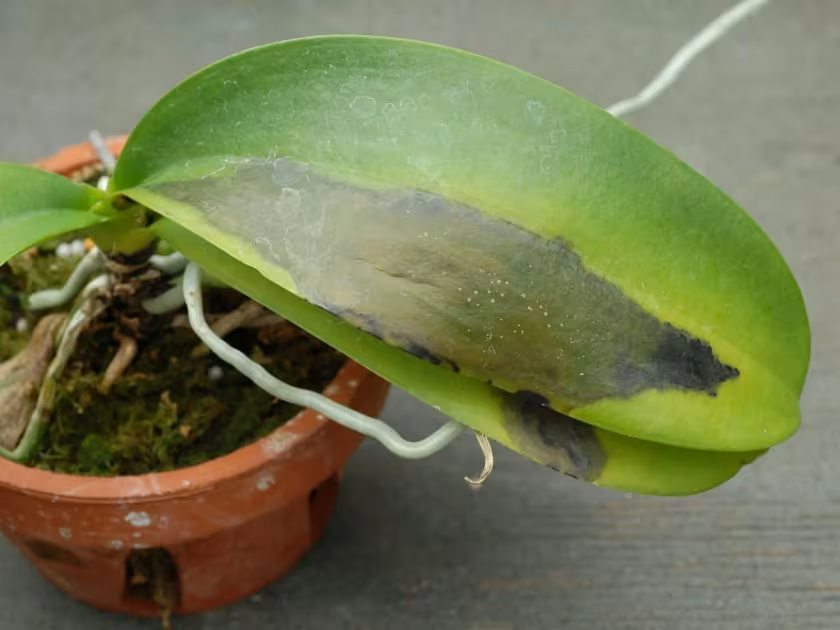
Description
Symptoms
An early sign of Acidovorax infection is the appearance of small, water-soaked spots that eventually turn brown or dark gray. These necrotic zones gradually expand, often surrounded by a characteristic yellow chlorotic halo.
On the leaves of infected plants, typical wilting is observed, starting from the leaf margins. Under high humidity conditions, a bacterial exudate, appearing as a whitish or creamy film, may be visible on the surface of the infected areas.
When fruit is infected, particularly in cucurbits, deep ulcers develop, leading to deformation and total rotting of the fruit. Affected tissues lose their structural integrity, become soft, and emit an unpleasant, foul odor.
In cereal crops, the disease manifests as long stripes or lesions along the leaf blades. As the disease progresses, stems lose structural strength, causing lodging, and the photosynthetic process is critically impaired.
Systemic infection of young plants often leads to complete mortality at the seedling or early leaf stage. Affected seedlings appear stunted, growth is significantly slowed, and the root system fails to develop properly.
Pathogen
The disease is caused by Gram-negative rod-shaped bacteria belonging to the genus Acidovorax. These motile microorganisms are capable of actively colonizing the vascular system and tissues of plants, triggering severe pathological changes.
These pathogens are classified as either obligate or facultative parasites, affecting a wide range of agricultural crops. The most well-studied representatives are species that cause bacterial fruit blotch in melons and cucumbers, as well as bacterial blight in various cereal crops.
These bacteria exhibit a high degree of adaptation to changing environmental conditions. They can persist for long periods in plant debris, seeds, and soil, making them a significant threat to subsequent growing cycles.
Bacterial replication occurs through cell division, accompanied by the release of specific exoenzymes that degrade host cell walls. This leads to tissue softening and the development of necrotic processes, typical for most bacterial diseases within this genus.
During infection, bacteria penetrate the plant primarily through natural openings like stomata or through mechanical tissue damage. Once inside, the pathogen spreads rapidly through intercellular spaces, resulting in systemic infection of the organism.
Conditions for development
High humidity and soil moisture are key factors for disease development. The optimal conditions for the active reproduction of Acidovorax bacteria occur at temperatures between 25 and 30 degrees Celsius, accompanied by frequent rainfall.
Pathogen spread within agroecosystems occurs primarily through rain splashes, irrigation water, and farm machinery. Bacteria are easily transferred from infected areas to healthy ones during soil cultivation or routine crop maintenance activities.
Contaminated seeds play a crucial role in disease dissemination. Bacteria can persist under the seed coat, enabling long-distance transport and the infection of new geographical areas even in the absence of a prior local disease history.
Adverse weather events, such as hail or strong winds that cause plant damage, create perfect entry points for the pathogen. Mechanical injuries accelerate the infection process and trigger the transition of the disease into an epiphytotic phase.
Poor crop rotation practices and the accumulation of infected plant debris in the soil favor the survival of the pathogen. Dormant bacterial forms can withstand significant temperature fluctuations, reactivating when warm and humid conditions return in the spring.
Why it matters
The economic impact of Acidovorax lies in a significant reduction of crop productivity. In cases of severe infection, yield losses can range from 30 to 80 percent, rendering the cultivation of susceptible varieties economically unviable.
Damage to fruit quality makes the produce completely unfit for market or long-term storage. Bacterial rot spreads rapidly in storage facilities, affecting healthy fruit upon contact and compounding total economic losses.
The disease negatively influences plant physiological processes, including transpiration and carbohydrate accumulation. This leads to a decline in produce quality, flavor, and nutritional value, which is particularly critical for vegetable crops.
The long-term persistence of these bacteria in the soil poses a challenge for future planting. Fields once infested with Acidovorax require extended intervals without susceptible crops, restricting the flexibility of crop rotation schedules for farmers.
Epiphytotic disease outbreaks can result in the destruction of entire fields within a very short timeframe. This forces agricultural producers to incur additional costs for eradicating infection clusters and applying expensive chemical plant protection products.
Protection
The foundation of Acidovorax management is the use of high-quality, certified seed material that is free from pathogens. Treating seeds with specialized chemical or biological agents can significantly reduce the risk of primary field infection.
Adhering to a strict and well-planned crop rotation is an essential measure. It is highly recommended to avoid planting susceptible crops for at least 3–4 years, replacing them with non-host plants to interrupt the bacterial reproduction cycle.
Timely removal and destruction of crop residues after harvest are vital. Deep plowing facilitates rapid organic matter decomposition and the death of bacteria that cannot survive long outside the host plant tissues.
To prevent disease spread during the growing season, prophylactic spraying with copper-based bactericides should be employed. These create a protective barrier on the leaf and stem surfaces, preventing bacterial penetration into the plant tissues.
- Utilizing resistant cultivars and hybrids;
- Regular disinfection of agricultural tools and equipment;
- Optimizing irrigation patterns to reduce foliage humidity;
- Integrated pest management to prevent tissue injury;
- Early identification and isolation of initial infection clusters in the field.
Discussion
No discussions yet — be the first.