
Acholeplasmatosis
Acholeplasmataceae
Description
Symptoms
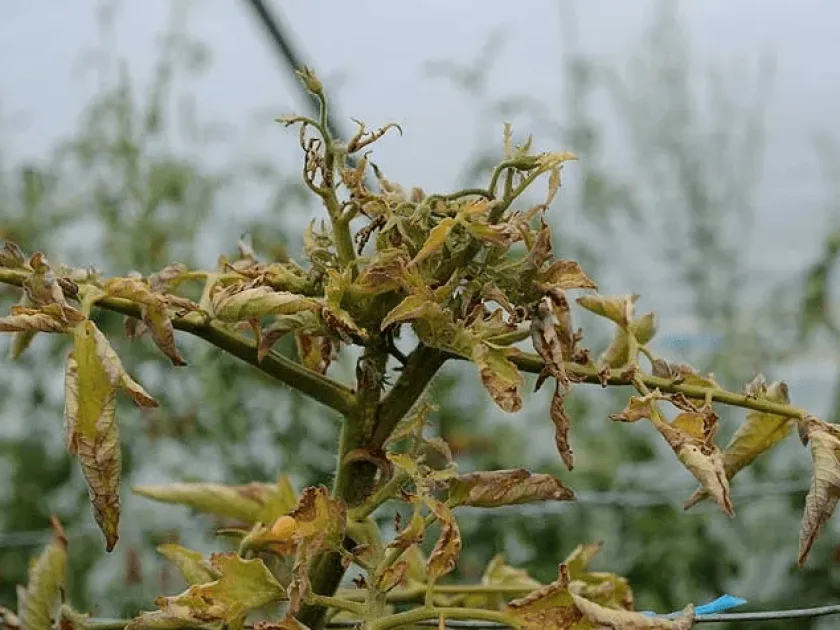
A hallmark symptom of acholeplasmatosis is phyllody, where floral parts transform into leaf-like structures. This deformation renders the plant sterile, as normal reproductive organs fail to develop.
The "witches' broom" effect is another characteristic sign. This involves the proliferation of numerous, stunted, and chlorotic shoots emerging from leaf axils, giving the plant a bushy appearance.
Dwarfing and severe growth stunting are common indicators. Shortened internodes prevent the plant from reaching its full size, resulting in a condensed and abnormal vegetative habit.
In root crops, the disease causes the formation of excessive lateral roots and a distorted crown. This leads to a significant reduction in the weight and overall quality of the harvested produce.
Leaf yellowing (chlorosis) often starts at the apical points and gradually spreads. The foliage may become crinkled or rolled, reflecting the underlying systemic stress caused by the disruption of phloem functions.
Pathogen
The causal agents of acholeplasmatosis are specialized microorganisms belonging to the Acholeplasmataceae family. These organisms, classified within the class Mollicutes, are unique because they lack a rigid cell wall, making them highly adaptable.
These pathogens function as obligate parasites, residing primarily within the phloem tissues of host plants. Their lack of a cell wall allows them to deform and move through the narrow sieve elements, severely hindering the plant's nutrient transport system.
Transmission occurs primarily through insect vectors, specifically leafhoppers and planthoppers. When these insects feed on an infected plant, they acquire the pathogens, which then multiply within the insect before being transmitted to healthy plants.
The pathogen's biology is tightly coupled with its vector. Without the aid of insects, the spread of the disease within an agricultural field is severely restricted, highlighting the importance of vector control.
Research indicates that these microorganisms possess a limited genome, which necessitates a strictly parasitic lifestyle. They rely entirely on the host's cellular machinery to replicate and survive within the plant environment.
Conditions for development
Disease spread is highly correlated with the population density of insect vectors. Warm, dry weather conditions tend to accelerate the migration and activity of leafhoppers, leading to outbreaks.
The presence of wild weed species in proximity to crops acts as a reservoir for the pathogen. These weeds often remain asymptomatic, serving as silent overwintering sites for the bacteria.
The use of infected vegetative propagation material is a primary driver of long-distance disease transmission. Introducing such material into clean fields guarantees the establishment of the infection.
Environmental temperatures above 25°C typically favor the replication of the pathogen within the plant. Consequently, symptoms often appear more rapidly and severely during peak summer months.
Poor agricultural practices, such as lack of field border maintenance or ignoring the necessity of spatial isolation, significantly increase the vulnerability of the crop to secondary infection.
Why it matters
Acholeplasmatosis causes severe economic loss by rendering plants non-productive. Since the infection is systemic and disrupts essential transport processes, affected plants fail to produce marketable yields.
The physiological impact on the plant involves a complete breakdown of normal hormonal balance. This stops fruit development, reducing crop yield to virtually zero in heavily infected sections of the field.
Infected plants exhibit weakened vigor, making them significantly more susceptible to other pathogens and environmental stressors. This results in cumulative damage beyond the direct impact of the infection.
The inability to cure infected plants means that management is focused exclusively on prevention. Once an area is infested, the cost of labor and management to cull affected plants is substantial.
Continuous presence of the pathogen in a field reduces the efficiency of inputs like water and fertilizers, as the affected plants are unable to utilize these resources for biomass accumulation.
Protection
Integrated pest management focusing on vector control is the most effective approach. Applying systemic insecticides at critical growth stages helps reduce the population of insects capable of spreading the disease.
Maintaining spatial isolation between susceptible crops and potential weed reservoirs is essential. Keeping field borders clear of wild host plants helps minimize the incidence of new infections.
Strict quality control for seeds and nursery stock is paramount. Using certified pathogen-free material is the single most important step in preventing the introduction of acholeplasmatosis into clean fields.
Cultural practices, including proper crop rotation and the prompt removal of symptomatic plants, help disrupt the transmission cycle and lower the pathogen load in the agricultural environment.
- Regular field monitoring for vector presence.
- Immediate rogueing and destruction of infected symptomatic plants.
- Application of seed treatments to protect young plants.
- Use of resistant or tolerant crop varieties.
Discussion
No discussions yet — be the first.