
Acholeplasmosis
Acholeplasma
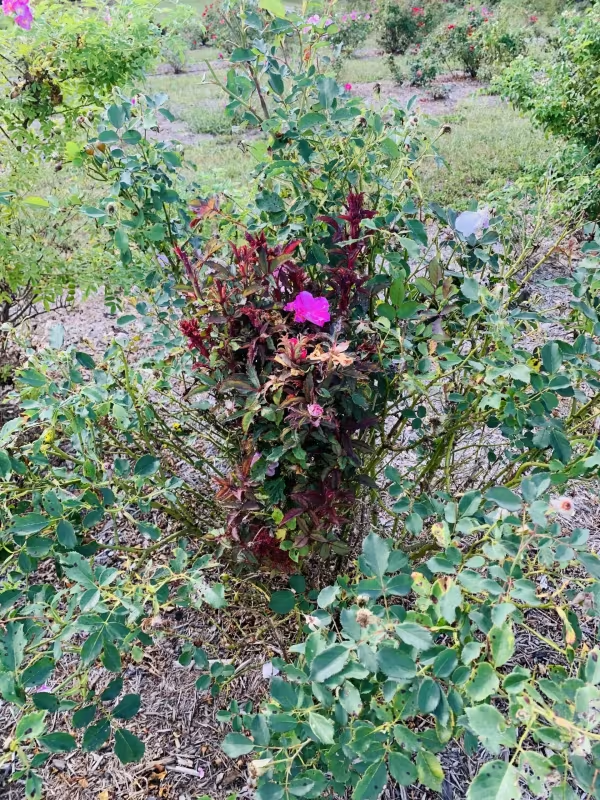
Description
Symptoms
Symptoms of acholeplasmosis often manifest as generalized growth suppression and metabolic disorders. A classic sign is chlorosis, which can be interveinal, leading to a yellowing or reddening of the leaves depending on the host species.
Infected plants frequently exhibit severe stunting, with shortened internodes resulting in a compact, bushy appearance. A specific, well-known symptom is the formation of witches' brooms, where adventitious buds sprout abnormally, creating dense clusters of shoots.
Flowers are often severely affected, showing phyllody, where floral parts transform into leaf-like structures, or virescence, where petals turn green. These reproductive organs become sterile, leading to a significant loss of harvestable yield.
Root systems may also be compromised, showing reduced development, necrosis, and an inability to uptake essential minerals. This leads to the eventual decline and death of the plant, especially under stress conditions like drought or nutrient deficiency.
- Leaf chlorosis and yellowing
- Extreme stunting and reduced internode length
- Witches' broom (excessive branching)
- Phyllody and abnormal flower development
- Total plant sterility and yield loss
Pathogen
Acholeplasmosis is caused by microorganisms of the genus Acholeplasma, which belong to the class Mollicutes. These pathogens are characterized by the absence of a cell wall, making them highly adaptable and able to survive within the phloem of host plants.
These organisms are classified as phytoplasmas that colonize the sieve tubes. They are obligate parasites, meaning they cannot complete their life cycle or survive for long periods outside the host organism or a specific insect vector.
The primary transmission mechanism involves phloem-feeding insects such as leafhoppers. The pathogen replicates within the insect's body, which serves as a reservoir, and is transmitted to healthy plants during the insect's feeding process.
Pathogen spread is systemic, meaning once the infection is established, the acholeplasmas move through the phloem to colonize new growth, branches, and eventually the entire plant. This movement is facilitated by the plant's nutrient transport system.
In addition to insect vectors, the disease can be transmitted via infected plant material used for propagation. Contaminated tools used in grafting or pruning also present a significant risk of transferring the pathogen between plants.
Conditions for development
The incidence of acholeplasmosis is directly linked to the population density of insect vectors. Warm and dry weather patterns promote the rapid proliferation of leafhoppers and other sucking insects, significantly increasing infection rates.
The presence of weeds in and around fields acts as a critical reservoir for the pathogen. Many wild host plants harbor the infection without showing severe symptoms, providing a permanent source for new outbreaks when vectors migrate.
Agronomic practices that lead to high plant density can create microclimates favored by pests. Poor ventilation within dense crops increases the humidity and temperature around the foliage, encouraging insect activity and pathogen transfer.
Inadequate field hygiene, particularly the failure to remove infected plants promptly, allows the disease to spread. Once the pathogen is established in an area, the constant feeding of vectors ensures the cycle continues year after year.
Improper care of cutting tools during manual agricultural operations, such as pruning or training, is a frequent cause of localized outbreaks. Without disinfection, a single infected plant can lead to the contamination of an entire crop row.
Why it matters
The primary harm caused by acholeplasmosis is the substantial reduction in yield and product quality. In many cases, infected plants suffer from complete sterility, making them useless for commercial agricultural production.
The systemic nature of the infection makes it impossible to cure plants once they are colonized. This forces growers to remove entire plants, resulting in significant economic loss and the need for expensive replanting efforts.
Acholeplasmosis often acts as a predisposing factor for other opportunistic diseases. By weakening the host plant's immune system and disrupting its nutrient distribution, the pathogen makes it susceptible to fungal and bacterial infections.
The presence of the disease in nursery stock poses a high risk to the entire agricultural industry. If infected seedlings are distributed, the pathogen can be introduced into new, previously unaffected regions, potentially devastating local crops.
Economic damage also includes the costs of intensive pest management programs required to keep insect vector populations at bay, alongside the potential loss of market access due to phytosanitary regulations regarding infected crops.
Protection
The most effective strategy is a combination of vector control and stringent sanitation. Regular application of insecticides is necessary to suppress the populations of leafhoppers during periods of high pest activity.
Using certified, disease-free planting material is the foundation of preventing acholeplasmosis. Growers should ensure that all propagated plants are sourced from reputable suppliers who conduct regular health testing and virus-free certification.
Field sanitation is essential, including the systematic removal and destruction of infected plants and surrounding weeds. This significantly reduces the environmental load of the pathogen and disrupts the transmission cycle.
Rigorous disinfection of all pruning and grafting tools is mandatory. Using alcohol or other appropriate disinfectants between each plant effectively prevents the mechanical transmission of the pathogen during daily cultivation tasks.
Regular field monitoring and early detection allow for the rapid removal of symptomatic plants, preventing the establishment of localized infection hotspots. This integrated management approach is crucial for maintaining the health of large-scale plantations.
Discussion
No discussions yet — be the first.