
Achnanthes coarctata
Achnanthes coarctata
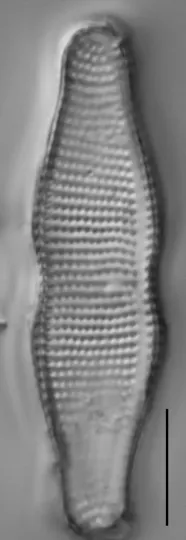
Description
Pathogen
Achnanthes coarctata is a species of diatomaceous algae and is not a plant pathogen. It does not cause diseases in crops or other agricultural plants; therefore, there are no symptoms of infection or plant damage associated with this organism.
As a biological entity, it belongs to the class Bacillariophyceae. These microscopic algae are characterized by their unique silica cell walls, known as frustules, which are composed of two overlapping valves with a distinct central constriction.
In agricultural settings, these diatoms are often found in irrigation water, reservoirs, or drainage ditches. They function as primary producers within the aquatic food web rather than as parasites of terrestrial vegetation.
Scientific interest in this species is primarily focused on phycology and hydrobiology. Its presence in farm water sources is generally considered a neutral biological indicator rather than a sign of a phytopathological threat.
No agricultural fungicides or pesticides are required for this organism, as it does not negatively impact the growth, development, or yield of commercial crops.
Conditions for development
The development of Achnanthes coarctata is strictly tied to aquatic environments. They require specific levels of dissolved silica to maintain the structural integrity of their silicon-based frustules.
Environmental factors such as light intensity and water temperature are critical for their growth. They thrive in environments where nutrient availability, particularly minerals, is consistent with their physiological needs.
Eutrophication of agricultural water sources due to fertilizer runoff can create conditions where diatom populations increase. This often results in a visible biofilm on the surfaces of irrigation equipment.
Dispersal is achieved through water flow and current movement. Because they are sessile organisms attached to substrates, their distribution is determined by the hydraulic characteristics of the water system.
The species is resilient to various environmental conditions, including minor fluctuations in water salinity, which allows it to persist in a wide range of inland aquatic ecosystems.
Discussion
No discussions yet — be the first.