
Achlya ambisexualis
Achlya ambisexualis
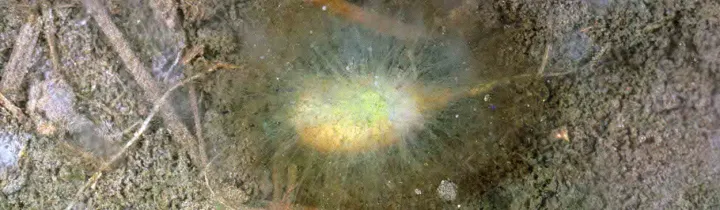
Description
Pathogen
Achlya ambisexualis is a species of water mold belonging to the class Oomycetes. These organisms are known for their filamentous growth and complex reproductive cycles in aquatic environments.
They are characterized by the production of both male and female sex organs, which allows for genetic recombination and adaptation to various ecological stressors. This biological feature makes them robust survivors in diverse conditions.
The organism grows as a network of coenocytic hyphae, lacking cell walls between nuclei, allowing rapid nutrient flow. This structural design enables the pathogen to colonize available organic matter very efficiently.
Reproduction is primarily achieved through motile zoospores equipped with flagella. These spores can travel through the water column to locate and infect vulnerable organic substrates, such as fish eggs.
While often acting as saprotrophs on decaying matter, they can behave as opportunistic pathogens, particularly in artificial aquatic systems where host organisms are confined.
Conditions for development
The proliferation of Achlya ambisexualis is strongly influenced by the presence of organic enrichment in the water. High levels of nutrients provide the substrate necessary for rapid colonization.
Water temperatures between 15°C and 25°C are considered optimal for the vegetative growth of the pathogen and the synchronous release of infectious zoospores.
Reduced water circulation and stagnant conditions often lead to an accumulation of waste products, creating an ideal environment for the water mold to thrive and spread.
Host susceptibility is increased by external stressors such as physical damage, poor water quality, or crowded conditions in hatchery tanks, which lower the natural resistance of the fish eggs.
Environmental stability is key to preventing outbreaks; sudden fluctuations in water pH or oxygen saturation can sometimes trigger biological stress in the host, favoring the pathogen's attack.
Why it matters
In hatcheries, Achlya ambisexualis causes significant economic losses by infecting fish eggs. The hyphae create dense, cotton-like masses that envelop the eggs.
This physical cover acts as a barrier, suffocating the developing embryos by restricting the essential exchange of gases like oxygen, leading to mass mortality of the spawn.
The infection is highly contagious within a confined tank; dead eggs act as primary reservoirs, releasing millions of spores that quickly infect surrounding healthy specimens.
Beyond eggs, the pathogen can attack weakened juvenile fish, causing necrotic skin lesions and systemic infections that further undermine the survival rate of the batch.
Without intervention, an infestation can devastate an entire hatching lot in a matter of days, making it one of the most critical threats in freshwater aquaculture.
Protection
Prevention is centered on maintaining high standards of hatchery hygiene. Frequent removal of dead eggs is essential to break the infection cycle at its early stage.
Water treatment systems, particularly those incorporating ultraviolet (UV) sterilization, are highly effective in eliminating zoospores before they enter the hatching tanks.
Chemical prophylaxis using approved antiseptic agents can be employed during the incubation process to keep fungal populations below the threshold of economic damage.
Proper water management, including adequate aeration and filtration to minimize organic load, is a foundational step in preventing the establishment of the water mold.
Constant monitoring of the water environment allows managers to detect the initial signs of cottony growth, enabling prompt containment before the infection becomes unmanageable.
Discussion
No discussions yet — be the first.