
Acaulospora
Acaulospora
Description
Symptoms
Since Acaulospora is not a disease, there are no symptoms such as necrosis, chlorosis, or wilting associated with its presence.
The positive effect of the symbiosis is manifested by the enhanced vegetative growth and overall vigor of the plant.
Laboratory techniques involving root staining are required to observe the characteristic fungal structures such as vesicles and internal mycelium.
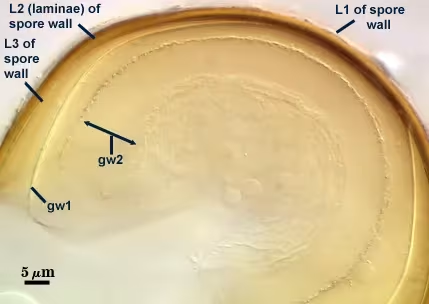
Soil analysis can reveal the presence of the genus by identifying its unique spores under a microscope, which are known for their specific surface ornamentation.
Plants colonized by these fungi often show a deeper green color and better resilience against environmental stress factors.
Pathogen
The genus Acaulospora belongs to the group of arbuscular mycorrhizal fungi (AMF), which are essential for natural plant growth.
It is crucial to state that these fungi are not plant pathogens and do not cause diseases; rather, they are beneficial symbiotic organisms.
These fungi form an intimate association with the roots of most terrestrial plants, extending their reach far beyond the root surface.
The life cycle involves the production of distinct spores that germinate in the presence of root exudates from host plants.
Unlike many other organisms, they do not damage plant tissue but instead create specific structures like arbuscules inside root cells for nutrient exchange.
Conditions for development
The growth of these fungi depends on the availability of a living host root system and appropriate soil conditions.
They thrive in soils that are not overly disturbed and possess a moderate level of organic matter for maintaining biological activity.
The presence of excess soluble phosphorus in the soil tends to suppress the formation of mycorrhizal associations, as the plant no longer relies on the fungus for nutrient uptake.
Soil aeration and pH levels play a significant role, with most species favoring well-drained, slightly acidic to neutral soils.
Climatic factors such as soil temperature influence the speed of mycelial colonization, usually peaking during the warmer growth season.
Why it matters
Acaulospora species are not harmful to agricultural crops; they are considered vital components of healthy agricultural soils.
There is no record of economic loss or crop damage caused by this genus, as it contributes to improved nutrient efficiency.
In depleted or heavily tilled soils, the absence of these fungi is a negative factor that may limit the plant's yield potential and stress resistance.
The only impact is the symbiotic investment of plant photosynthates, which is balanced by the significantly increased mineral intake provided by the fungus.
Therefore, any impact on crop management should be focused on encouraging their presence rather than eliminating them.
Protection
Control measures are not applicable as these fungi are beneficial; management practices focus on conservation and enhancement.
Reduced tillage practices are highly recommended to preserve the integrity of the underground fungal hyphal network.
The use of sustainable farming techniques and organic amendments fosters a diverse and healthy soil microbiome, including Acaulospora.
Care should be taken when applying synthetic fungicides, as some chemicals can negatively impact the symbiosis if used in excess.
Many modern agricultural programs now include the inoculation of soil with mycorrhizal fungi to restore depleted fields and boost sustainability.
Discussion
No discussions yet — be the first.