
Acarospora
Acarospora
Description
Symptoms
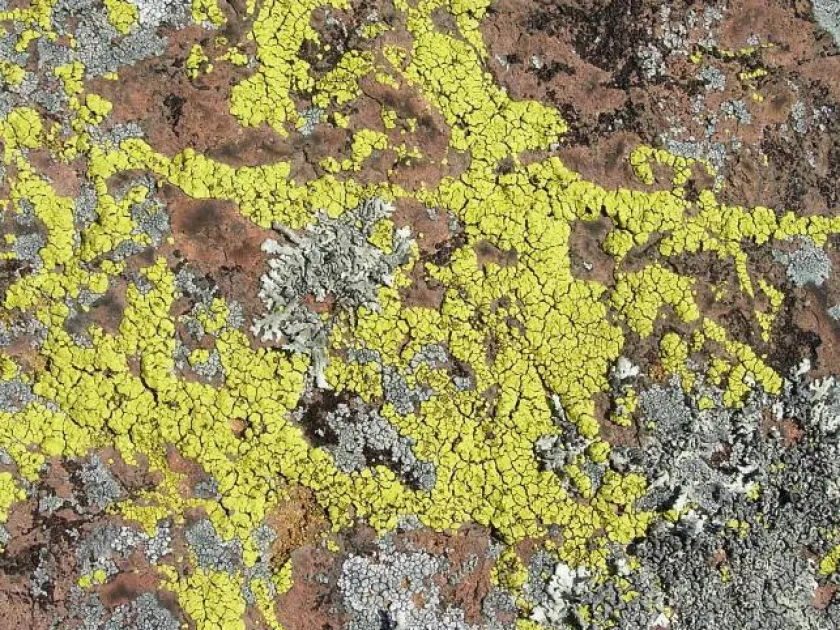
The primary sign of Acarospora presence is the development of tight, crust-like patches that adhere strongly to the underlying bark or stone surface.
The thallus often exhibits an areolate structure, appearing as a mosaic of small, tightly packed scales that can be dull or slightly lustrous.
Coloration ranges from yellow and pale green to deep brown or reddish-brown tones, largely depending on environmental conditions and moisture.
Unlike fungal diseases, the affected area remains dry and firm, showing no signs of necrotic tissue, watery lesions, or discharge from the plant.
When examined closely, the growth is clearly superficial and does not penetrate deep into the phloem or xylem of the tree host.
Pathogen
Acarospora is a genus of crustose lichens, which are complex symbiotic organisms consisting of a fungal partner and photosynthetic algae or cyanobacteria.
In agronomy, Acarospora is not considered a true plant pathogen, as it does not invade living plant tissue or cause infections such as rots or blights.
These organisms are epiphytes, meaning they use the surface of tree bark or rocks exclusively as a physical substrate for attachment.
Because they do not have the specialized metabolic pathways to digest plant cells, they do not directly threaten the survival of their host plants.
Dissemination is achieved through spores that germinate on suitable surfaces, slowly developing into a characteristic thallus over several seasons.
Conditions for development
Acarospora species typically thrive in environments with good light exposure, often colonizing the sunnier aspects of tree trunks.
They are highly resistant to desiccation, employing a biological strategy that allows them to remain dormant during dry spells without losing viability.
Old trees with slow-growing, weathered bark are the most common hosts, as the stability of the surface provides a permanent base for the lichen.
The organism is sensitive to air pollution, particularly sulfur dioxide, which often makes its presence an indicator of relatively clean atmospheric conditions.
Stability in temperature and low moisture levels over long periods favor the gradual accumulation of the thallus on the host's surface.
Why it matters
Direct damage to the plant host is negligible since Acarospora does not derive any nutrients from the tree's sap or living tissues.
The main concern lies in the potential for the lichen cover to act as a harbor for secondary pests, including scale insects, mites, and their eggs.
Significant buildup of lichen can occasionally create a moist, sheltered microenvironment that might encourage other harmful organisms to settle.
In commercial orchards, heavy lichen growth is often interpreted as a sign of tree vigor decline, suggesting that the bark is not shedding fast enough.
While cosmetic in nature, the presence of these crusts can detract from the visual quality of landscaping and high-value ornamental trees.
Protection
Chemical control specifically for Acarospora is rarely necessary unless the aesthetic or pest-harboring concerns are significant for the grower.
Mechanical removal using a stiff-bristled brush during the dormant season is the most environmentally friendly and effective way to clean the bark.
A dilute solution of iron sulfate (ferrous sulfate) is a standard treatment that helps detach lichens while providing a mild antiseptic effect for the bark.
Regular whitewashing of trunks with a lime-based mixture acts as a preventative measure, preventing the lichen spores from finding a suitable anchor.
- Promote tree vigor through optimal fertilization and irrigation
- Conduct periodic pruning to encourage bark renewal
- Monitor for secondary pests that may hide beneath the lichen
Discussion
No discussions yet — be the first.