
Festulolium
x Festulolium ascendens (Retz.) Asch. & Graebn.
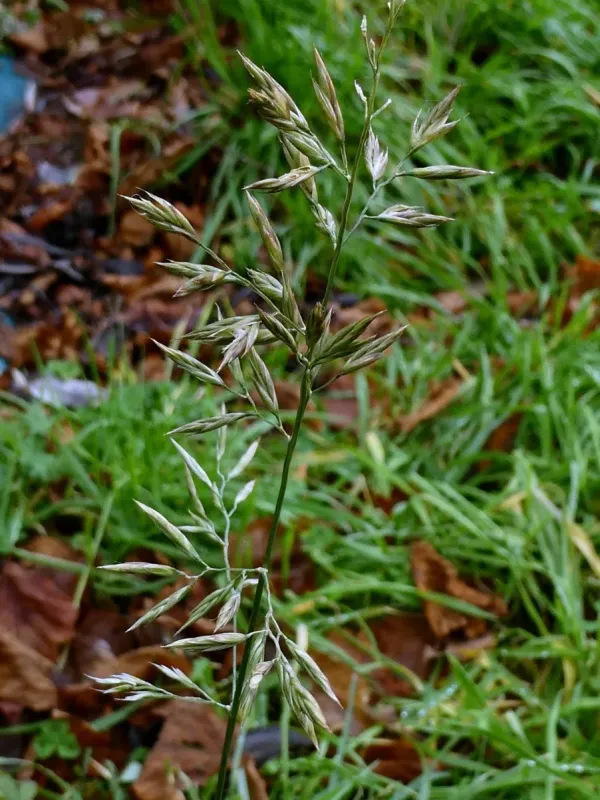
Description
Sowing dates
Festulolium is a productive intergeneric hybrid developed by crossing meadow fescue (Festuca pratensis) or tall fescue (Festuca arundinacea) with perennial ryegrass (Lolium perenne). This hybrid combines the hardiness and persistence of the fescue parent with the rapid growth and high nutritional quality of the ryegrass parent.
The optimal sowing time is during early spring when soil temperatures reach 6–8 degrees Celsius. Autumn seeding is also possible in milder climates, provided there is sufficient moisture and time for the plants to establish before the onset of winter frost.
The seeding rate typically ranges from 15 to 25 kg per hectare, depending on soil type and the intended use of the field. Proper calibration of seeding equipment is essential to ensure even distribution and uniform stand density across the field.
Seeds should be sown at a depth of 1.5 to 3 cm. Shallow planting in heavy, moist soils is preferable, whereas slightly deeper sowing may be necessary in sandy, lighter soils to prevent the seeds from drying out before germination.
Post-seeding rolling is highly recommended to improve soil-to-seed contact and ensure consistent germination. This practice helps to retain soil moisture around the seeds, which is crucial for early seedling development and establishment.
Growing requirements
Festulolium is highly versatile and adaptable to various environmental conditions. It excels in temperate regions, where its ability to withstand both cold winters and moderate summer heat provides a distinct advantage over single-species forage grasses.
The crop thrives in fertile, well-drained soils with a pH ranging from 6.0 to 7.0. While it can tolerate a wider range of soil conditions than many ryegrass varieties, high levels of organic matter and balanced moisture availability are key to maximizing biomass production.
Nitrogen fertilization is vital for maintaining high yields, as the plant has a high capacity for nutrient uptake during the active growing season. Split applications of fertilizer throughout the season help to support vigorous regrowth after every harvest or grazing event.
The crop exhibits superior drought tolerance compared to pure perennial ryegrass, making it a reliable choice for regions prone to sporadic summer dryness. Its deep root system allows it to access deeper soil moisture reservoirs during periods of low rainfall.
Persistence is one of the most valued traits of modern festulolium varieties. With proper management, including balanced fertilization and controlled grazing, a stand can remain highly productive for 4 to 6 years, reducing the frequency of field reseeding.
Yield
Festulolium is renowned for its high yield potential, often outproducing traditional pasture grasses by a significant margin. Depending on climate and soil fertility, annual dry matter yields can reach 10 to 15 tonnes per hectare under intensive management.
The nutritional profile of the forage is excellent, characterized by high levels of crude protein, soluble sugars, and digestible fiber. This makes it an ideal feed source for high-producing dairy cows and other livestock that require nutrient-dense diets.
The crop's rapid growth rate allows for multiple cuts per season, typically ranging from 3 to 5 depending on the regional climate. Its quick recovery after mowing makes it exceptionally efficient at producing biomass over a long growing season.
When used in pasture systems, festulolium provides consistent growth throughout the spring and autumn, filling critical feed gaps. It handles intensive rotational grazing well, provided that the plants are given adequate rest periods to rebuild energy reserves.
Combining festulolium with legumes like white clover can further enhance the overall feed quality and nitrogen efficiency of the stand. This practice supports sustainable agricultural systems by reducing the reliance on synthetic nitrogen fertilizers.
Main diseases and pests
While generally robust, festulolium can be susceptible to common grass pathogens such as rust and leaf spot diseases. These are most prevalent in humid, stagnant air conditions and can be mitigated by promoting good air circulation within the stand.
Insect pests, including aphids and various grass-feeding larvae, can occasionally cause damage to the foliage or root systems. Integrated pest management (IPM) strategies, such as encouraging natural predators, are preferred to minimize the need for chemical intervention.
Poor drainage is a significant threat to the health and longevity of a festulolium stand. Waterlogged conditions can lead to root rot and encourage the invasion of opportunistic weeds that thrive in compacted or excessively wet soil.
To reduce disease pressure, it is important to avoid over-densifying the stand and to ensure proper nitrogen management. Excessive nitrogen can lead to lush growth that is more attractive to pests and susceptible to fungal infections.
Choosing certified, locally adapted varieties is the most effective way to prevent widespread disease outbreaks. Modern breeding programs prioritize resistance to prevalent pathogens, ensuring that farmers can achieve stable yields with minimal chemical input.
Harvesting
For optimal nutritional quality, harvest should be timed just before or at the very beginning of the heading stage. Harvesting at this point ensures the highest balance between biomass volume and the digestibility of the forage.
When producing hay, rapid wilting and drying are necessary to prevent nutrient loss and maintain leaf integrity. Using mower-conditioners can significantly speed up the drying process, allowing the crop to be baled while still maintaining its high nutritional value.
Silage production is a highly recommended use for festulolium, as it effectively preserves the sugars and proteins necessary for livestock health. Wrapping bales in high-quality silage film ensures stable fermentation and reduces dry matter loss during storage.
Grazing management should focus on maintaining a residual height that encourages rapid regrowth. Overgrazing can deplete the plant's root reserves, leading to reduced productivity in subsequent cycles and long-term thinning of the stand.
The final harvest of the season should be carefully scheduled to allow the plants enough time to accumulate carbohydrates in the crown before the onset of winter. This preparation is essential for winter survival and vigorous early-season growth in the following year.