
Festulolium
Lolium x hybridum Hausskn. x Festuca pratensis Huds.
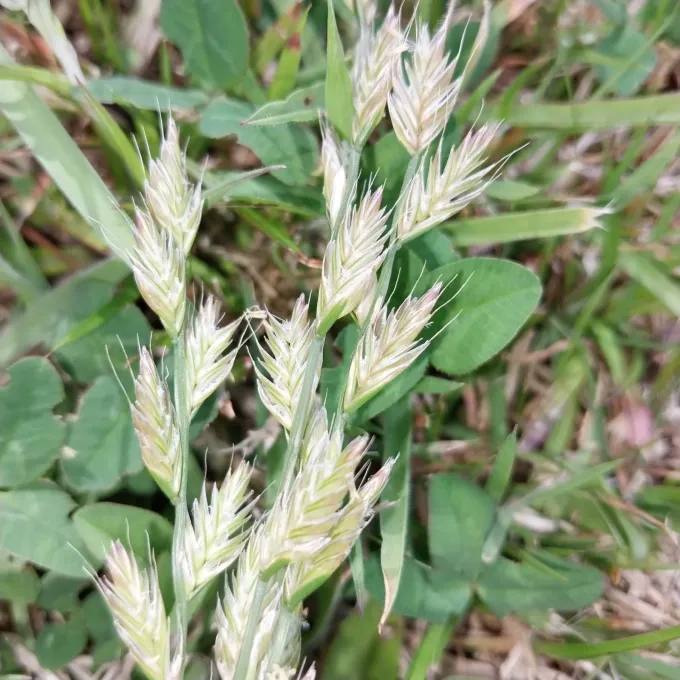
Description
Sowing dates
The optimal sowing time for Festulolium is in early spring or late summer. Spring sowing takes advantage of post-winter soil moisture, ensuring quick germination and strong establishment of the root system.
Late summer planting should occur at least six weeks before the first hard frost. This allows the plants to develop sufficient biomass to survive the winter and start growing vigorously the following spring.
The standard seeding rate is approximately 20–25 kg per hectare. A well-prepared seedbed, which is firm and finely textured, is essential for uniform germination and consistent crop density.
Seeds should be planted at a shallow depth of 1–2 cm. Proper soil contact is critical, and rolling the field after sowing can significantly improve emergence rates by preventing soil from drying out.
Festulolium is frequently integrated into mixtures with legumes like clover or alfalfa. This combination improves the nutritional profile of the hay and enhances the overall nitrogen balance of the field.
Growing requirements
As a hybrid between Festuca (fescue) and Lolium (ryegrass), Festulolium combines the hardiness of the former with the high yield and fast growth rate of the latter, making it highly versatile.
It thrives in a variety of soil types but performs best in fertile, well-drained loams with a neutral pH. It is notably more tolerant to waterlogging than pure ryegrass varieties.
The crop responds well to nitrogen fertilizer application, especially when split-applied after each harvest cycle. Balanced nutrient management is key to maintaining high productivity over several years.
Festulolium exhibits superior cold tolerance compared to many high-output grasses, allowing it to remain productive in temperate regions with harsh winters and fluctuating early spring temperatures.
The deep root system inherited from the fescue parent makes this crop more drought-tolerant than standard ryegrass, maintaining green growth longer during periods of limited rainfall.
Yield
Festulolium is known for its exceptional biomass production. Under intensive management, it consistently outperforms traditional grasses in dry matter yield per hectare throughout the season.
Typical annual yields range from 10 to 15 tonnes of dry matter per hectare. The crop is capable of supporting three to four high-quality cuts depending on moisture and nutrient availability.
The nutritional profile is characterized by high water-soluble carbohydrate levels and high protein content. This combination makes it a premier forage choice for high-producing livestock.
The stand can persist for 4–6 years with proper management. Its dense growth habit helps suppress weed encroachment, maintaining the purity of the forage over the lifespan of the field.
Energy density and digestibility remain high across different growth stages, which provides farmers with flexibility in their harvest timing without significantly sacrificing nutritional quality.
Main diseases and pests
While generally robust, Festulolium can be susceptible to rust diseases in humid, warm conditions. Monitoring during the peak growing season is recommended to detect early signs of infection.
Snow mold can be a concern in regions with prolonged snow cover, especially if soil temperatures remain slightly above freezing for extended periods under the snowpack.
Common agricultural pests like cereal flies or aphids may target young seedlings. Seed treatments and choosing appropriate planting windows are standard preventative measures used by agronomists.
To reduce disease pressure, it is essential to manage vegetation height through frequent cutting or controlled grazing. This prevents the buildup of stagnant air and moisture within the canopy.
Integrated Pest Management (IPM) strategies, including crop rotation and the use of resistant varieties, are the most effective ways to ensure the long-term health of Festulolium stands.
Harvesting
The ideal harvest stage is the onset of heading. Cutting at this stage provides the best compromise between total yield and the concentration of vital nutrients like protein and fiber.
When producing hay, mechanical conditioning is vital to ensure rapid drying. Reducing drying time minimizes nutrient leaching caused by dew or unexpected rainfall, preserving hay quality.
For silage production, the crop should be ensiled at 60–70% moisture content. The high sugar content of Festulolium facilitates rapid fermentation, resulting in a stable and palatable forage.
When used for pasture, rotational grazing is necessary to prevent overgrazing. Grazing animals should be moved once the sward is reduced to a specific stubble height to ensure rapid regrowth.
Post-harvest management should focus on restoring nutrients. Applying a nitrogen-rich fertilizer shortly after a cut helps the plant recover its energy reserves and promotes faster regrowth for the next cycle.