
Scutellospora calospora
Scutellospora calospora T.H. Nicolson & Gerd.
Description
Growing requirements
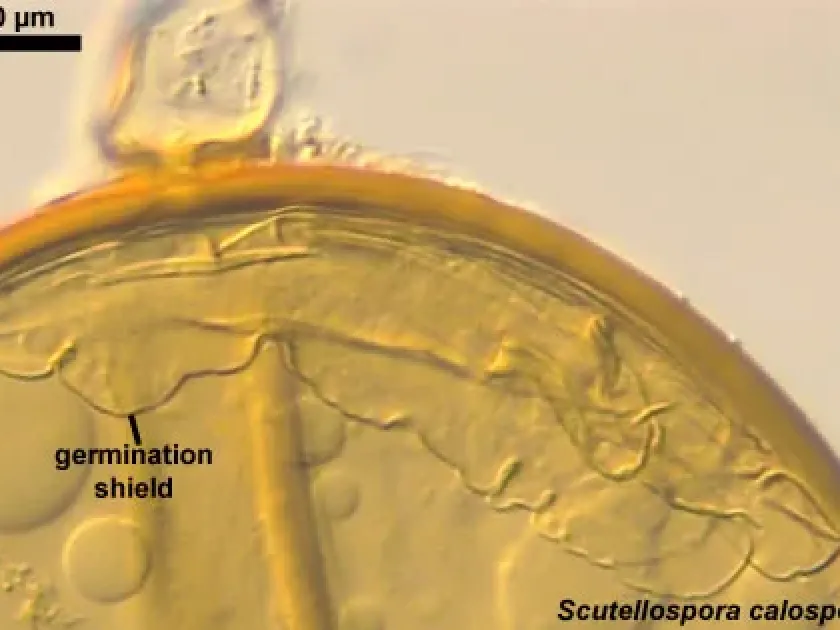
Scutellospora calospora is a prominent species of arbuscular mycorrhizal (AM) fungi belonging to the family Gigasporaceae. While not a conventional crop, it is a critical biological component of productive agricultural ecosystems, living in symbiotic association with the roots of diverse plant species.
This fungus exhibits a wide global distribution, thriving in various climatic zones ranging from temperate to tropical regions. Its primary biological function is the formation of a hyphal network that extends far beyond the rhizosphere, allowing plants to access mineral nutrients like phosphorus and zinc that are otherwise immobile in the soil.
Regarding environmental requirements, the fungus prefers well-aerated soils with moderate moisture levels. It plays a significant role in improving soil aggregation through the production of glomalin, a glycoprotein that binds soil particles together, thereby enhancing water infiltration and aeration for the host crops.
Effective agrotechnical practices for promoting this species involve conservation tillage methods. By minimizing soil disturbance, farmers can preserve the integrity of the extraradical mycelium, ensuring that the plant-fungus symbiosis remains active throughout the growing season.
Economically, Scutellospora calospora is utilized in the production of specialized bio-inoculants. Integrating these fungal spores into planting substrates helps optimize plant nutrition, reduces dependency on synthetic fertilizers, and strengthens the overall stress tolerance of agricultural crops.
Main diseases and pests
Intensive soil cultivation, such as deep plowing and frequent rototilling, acts as a primary threat to Scutellospora calospora by fragmenting its hyphal network and delaying the colonization of root systems.
The excessive application of soluble phosphate fertilizers significantly impairs the formation of arbuscular mycorrhiza, as the host plant reduces its carbon allocation to the fungus in high-nutrient environments.
Non-selective use of fungicides and certain soil-applied chemicals can severely inhibit the germination of spores and the development of the fungal colonization process within the host plant roots.
Continuous monocropping or the rotation of crops that do not support mycorrhizal colonization leads to a rapid decline in the density of fungal spores, negatively impacting subsequent crop development.
Soil degradation due to industrial contamination and excessive use of synthetic agricultural inputs hinders the biodiversity of the soil microbiome, including beneficial fungi like Scutellospora calospora.