
Periconia macrospinosa
Periconia macrospinosa Lefebvre & Aar.G. Johnson
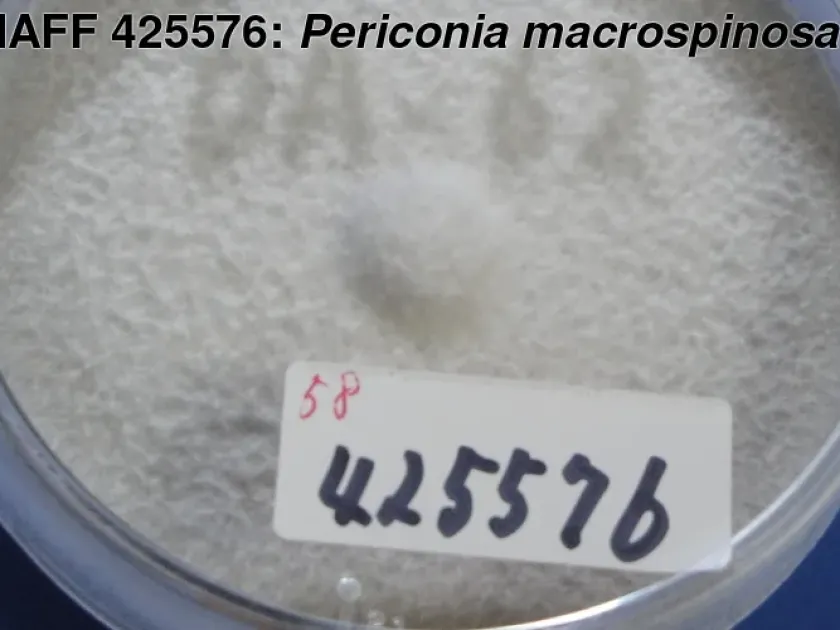
Description
Growing requirements
Periconia macrospinosa is a common soil-dwelling fungus primarily recognized as a saprotroph within agricultural ecosystems. It belongs to the class of mitosporic fungi and acts as a significant component of the microbial community in the rhizosphere of many cultivated plants.
This organism thrives in diverse soil environments, particularly those with high organic matter content. It plays a crucial role in the decomposition of plant residues, effectively contributing to nutrient cycling and the breakdown of cellulose and lignin within the topsoil layer.
The biological success of this fungus is attributed to its ability to form resilient chlamydospores. These structures allow the fungus to remain viable in the soil for extended periods, enduring fluctuations in temperature and moisture levels that would prove fatal to less adapted microorganisms.
Morphological identification is based on its distinct dark, branched conidiophores and spores characterized by prominent spines. These features allow for efficient dispersal through soil particles and water movement, facilitating the colonization of root zones as soon as conditions become favourable.
While often beneficial as a decomposer, its presence in the soil is monitored by agronomists because of its potential to influence plant vigor. Understanding its distribution is essential for assessing the overall biological activity and health of an agricultural soil profile.
Main diseases and pests
In certain environmental contexts, Periconia macrospinosa is implicated in the root rot disease complex. It tends to behave as an opportunistic pathogen, infecting plants that are already stressed by unfavorable soil conditions, such as compaction, poor drainage, or nutritional imbalance.
The primary damage occurs at the root level, where the fungus colonizes the cortex of the roots. This leads to reduced water and nutrient uptake, manifesting in symptoms like stunting, yellowing of lower leaves, and, in severe cases, the lodging of the crop during grain filling.
Management of this pathogen focuses on integrated pest management practices. Seed treatment with broad-spectrum fungicides is considered the first line of defense, providing early protection during germination and emergence when the young seedlings are most vulnerable to soil-borne pathogens.
Crop rotation remains a fundamental practice to prevent the build-up of fungal inoculum in the field. Avoiding the continuous cultivation of susceptible species helps to disrupt the life cycle of the pathogen and prevents the accumulation of its spores in the topsoil layer.
Improving soil structure through mechanical aeration and proper drainage reduces the incidence of root rot. Furthermore, the application of composts or biological soil amendments can enhance the antagonistic microbial population, which naturally suppresses the growth of Periconia.