
Funneliformis mosseae
Funneliformis mosseae T.H. Nicolson & Gerd.
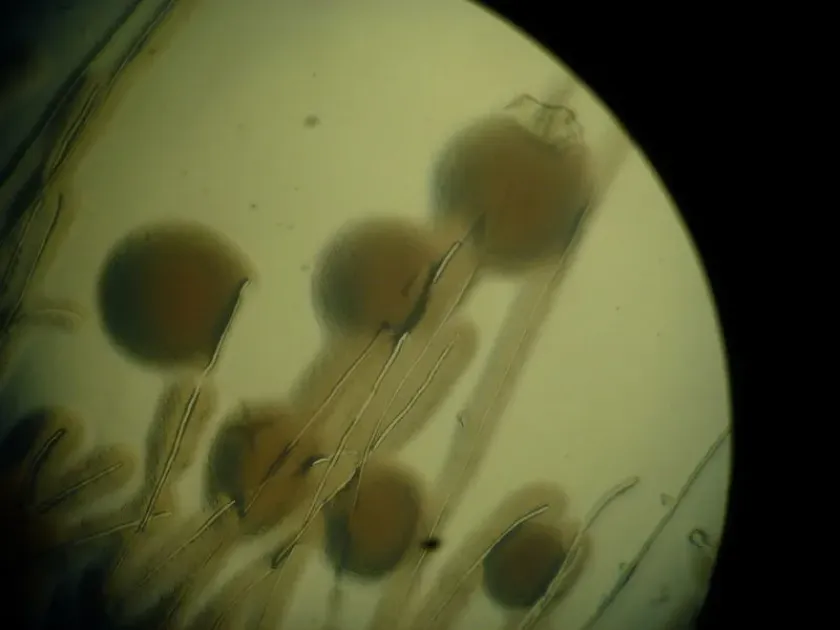
Description
Growing requirements
Funneliformis mosseae is a prominent species within the Glomeraceae family, globally recognized for its ability to form arbuscular mycorrhizal (AM) associations with the roots of most terrestrial plants. Rather than a cultivated crop, it serves as a biological agent that significantly enhances agricultural efficiency and sustainability.
This fungus exhibits a cosmopolitan distribution, occurring naturally in a vast range of soils and climatic zones. Its evolutionary adaptation allows it to thrive in diverse environments, where it functions as an extension of the plant's root system, facilitating the uptake of essential nutrients, particularly phosphorus and micronutrients, that are otherwise immobile in the soil.
The establishment of this symbiotic relationship is highly dependent on soil conditions, preferring well-aerated structures with moderate moisture levels. Fungal development is sensitive to pH fluctuations and becomes less effective in soils that are chronically waterlogged or severely compacted, as these conditions inhibit the respiration of the fungal hyphae.
Agrotechnical management regarding this fungus requires a shift toward regenerative practices. Farmers utilizing mycorrhizal inoculants must be cautious with heavy applications of mineral phosphorus, as high concentrations of soluble phosphates naturally suppress the symbiotic process, leading the host plant to reduce the colonization of the fungus.
In modern agricultural practice, the primary use of Funneliformis mosseae is in the form of soil inoculants for high-value crops and cereals. By fostering this symbiosis, farmers can improve plant survival rates under drought conditions and increase overall yields while reducing reliance on intensive synthetic fertilizer applications.
Main diseases and pests
The most significant threat to the presence and efficacy of Funneliformis mosseae in agricultural fields is frequent and deep mechanical tillage. Such practices fragment and destroy the underground network of hyphae, requiring the fungus to re-establish its symbiotic connections at a significant energy cost to the host plant.
Chemical interference remains a major concern, as the application of broad-spectrum fungicides can prove toxic to mycorrhizal spores and hyphae. Furthermore, high-intensity chemical fertilizer regimes create an environment where the symbiotic benefits are overshadowed by immediate nutrient availability, often resulting in a decline of the native fungal populations.