
Wavy hair-grass
Avenella flexuosa (L.) Parl.
Description
Growing requirements
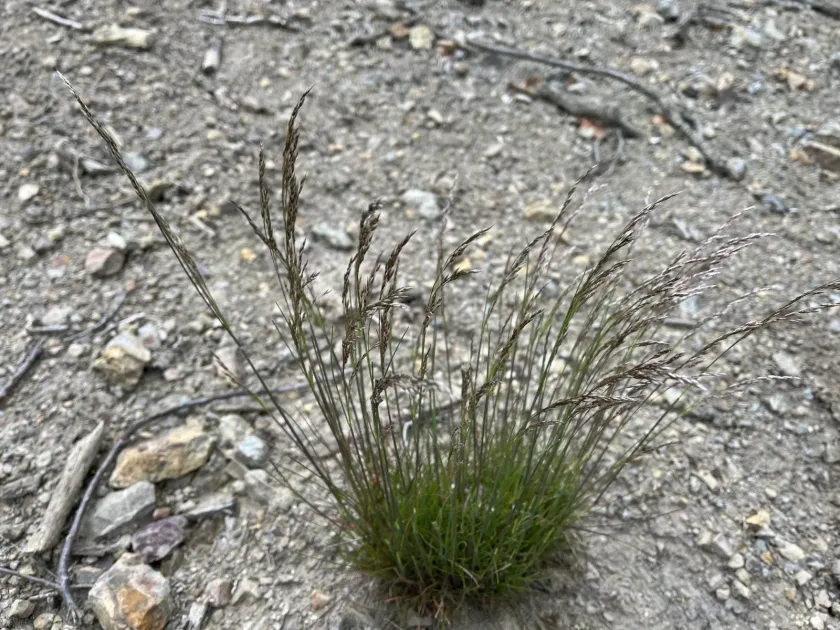
Wavy hair-grass (Avenella flexuosa) is a perennial member of the Poaceae family, widely distributed across temperate regions. It is characterized by its fine, thread-like leaves and delicate, arching panicles that give it a unique aesthetic appearance.
The species thrives in acidic, well-drained soils and is highly tolerant of nutrient-poor conditions. It is commonly found in woodlands and heathlands, where it forms dense, tufted clumps that provide structural stability to the soil surface.
Regarding climate, the plant is exceptionally hardy and prefers cool, moist growing seasons. While it performs best in partial shade, it can adapt to sunny environments provided that soil moisture remains consistent throughout the year.
Agricultural management is relatively simple compared to high-intensity crops. Maintenance primarily involves ensuring appropriate soil acidity and avoiding over-fertilization, as the plant is naturally adapted to low-fertility sites.
Its primary uses include ornamental landscaping, ecological restoration of disturbed sites, and its role as a component in hardy, low-maintenance pasture mixtures in mountainous or forest regions.
Main diseases and pests
The most common disease affecting this crop is leaf rust, which can proliferate under humid and stagnant air conditions. Regular thinning of dense patches is recommended to prevent such outbreaks.
Pests such as grass aphids can occasionally affect the vitality of the plant during the vegetative phase. Monitoring is advised during early spring to ensure the growth cycle remains uninterrupted.
Root system disturbance by soil-borne larvae, such as click beetle larvae, is a localized threat that can be mitigated through thorough pre-planting soil tillage.
Poor soil drainage poses a significant risk to the plant's health, leading to root rot and diminished vigor. Proper site selection or physical soil improvement is essential for long-term health.
In terms of management, avoiding the use of chemical herbicides is preferred, as the species is sensitive to many standard agricultural chemicals used in cereal crop protection.