
Vochysia spathulata
Vochsia spathulata
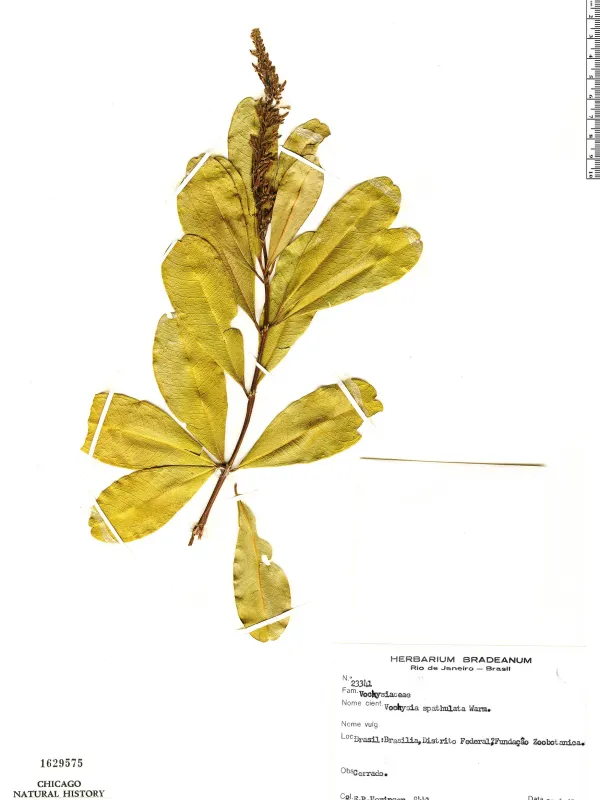
Description
Growing requirements
Vochysia spathulata is a prominent tree species belonging to the Vochysiaceae family, native to the tropical regions of South America. It is characterized by its significant size and ecological importance within the forest canopy, often contributing to the structural complexity of tropical habitats.
The tree thrives in environments with high rainfall and consistent tropical temperatures. It is well-adapted to the acidic, nutrient-poor soils typically found in its native ranges, showcasing a resilient root system that effectively captures available water and minerals in competitive forest ecosystems.
Botanically, the species is distinguished by its distinct spatulate leaves and straight, columnar trunk. These morphological traits make it a valuable species for reforestation efforts, as it contributes significantly to biomass accumulation and forest cover restoration in degraded tropical zones.
The primary economic value of Vochysia spathulata lies in its timber, which is utilized for construction, furniture making, and general carpentry. The wood is prized for its balance of workability, moderate density, and durability when managed properly within sustainable forestry systems.
Successful cultivation requires an understanding of silvicultural practices adapted to tropical conditions. Seedlings benefit from managed light conditions, ensuring they gain sufficient canopy exposure while being protected from excessive competition during their early developmental stages.
Main diseases and pests
Fungal pathogens represent one of the major threats to Vochysia spathulata, particularly in humid climates where stagnant air facilitates the rapid spread of spores. These infections can impact both foliage vitality and wood health, potentially reducing the timber yield.
Insects, such as wood-boring beetles, are among the most dangerous pests for this species. They tunnel into the stems and branches, causing structural damage that may facilitate secondary infections by bacteria or fungi, further weakening the health of the tree.
Habitat degradation and climate instability pose long-term risks to the survival of natural populations. Conservation strategies emphasize the protection of forest fragments and the establishment of biodiversity corridors to ensure genetic exchange and long-term viability.
Effective pest management involves integrated strategies, such as monitoring population levels of local pests and promoting natural predators. Maintaining a healthy ecosystem balance is often more sustainable than relying solely on chemical intervention for large-scale plantations.
Regular forest health assessments are essential for early detection of potential threats. Proactive measures, including the removal of heavily infested or infected individuals, help maintain the overall resilience of the stand and ensure high-quality timber production.