
Myrtle-leaved coffee
Coffea myrtifolia
Description
Growing requirements
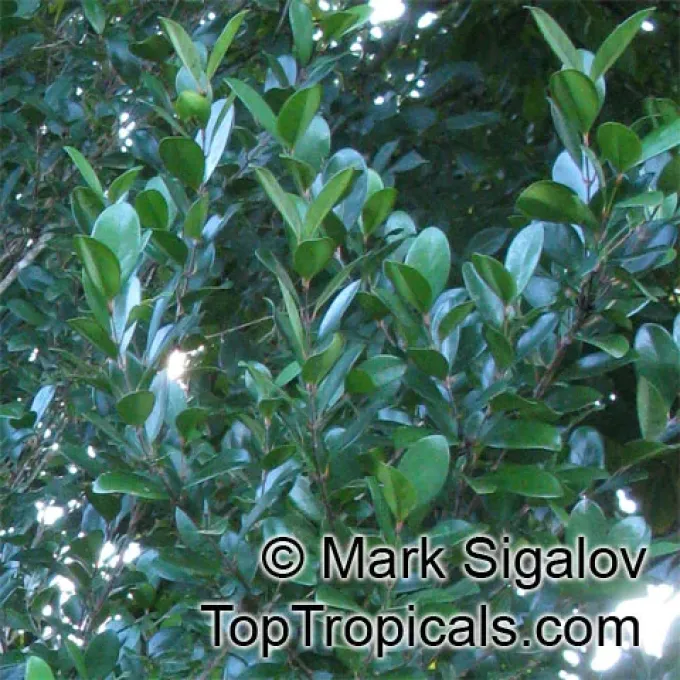
Myrtle-leaved coffee (Coffea myrtifolia) belongs to the Rubiaceae family. This evergreen shrub is highly regarded for its compact growth habit and dense, glossy foliage, which resembles the leaves of a myrtle plant.
The plant originates from tropical regions of Africa. It thrives in bright, indirect light, as direct sunlight can easily scorch its delicate foliage. The ideal temperature range for active growth is between +20°C and +25°C, with a strong preference for stable conditions without cold drafts.
The soil mixture for this crop must be loose, nutrient-rich, and have a slightly acidic pH (between 5.5 and 6.5). An ideal substrate consists of a mix of sod soil, leaf humus, peat, and sand to ensure adequate drainage and aeration for the roots.
This culture requires regular, moderate watering with soft, room-temperature water. During the active growing season, maintaining high humidity is crucial, and regular misting of the crown helps prevent the tips of the leaves from drying out.
Proper agronomic care includes regular fertilization during the spring and summer using complex mineral fertilizers designed for ornamental plants. In winter, the plant enters a period of relative dormancy, during which watering should be reduced and temperatures lowered to about +16°C.
Main diseases and pests
The primary pests affecting myrtle-leaved coffee are scale insects and spider mites, which typically thrive in environments with low humidity. Effective management involves using systemic insecticides and regular inspections of the underside of the leaves.