
Rhinanthus pumilus
Rhinanthus pumilus
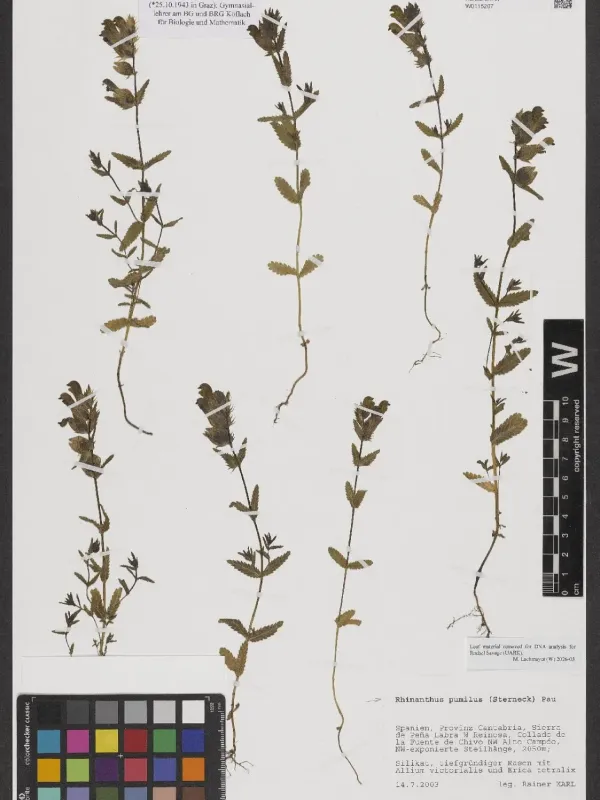
Description
Sowing dates
Rhinanthus pumilus is an annual herbaceous plant belonging to the Orobanchaceae family. It is known as a hemi-parasite, which means it obtains a portion of its nutrients by attaching its roots to the roots of neighboring host plants, typically grasses.
Seed germination occurs in early spring, following a necessary cold stratification period during winter. The lifecycle begins with the development of haustoria, specialized organs used to extract water and minerals from the host's vascular system.
In agricultural settings, this species is often viewed as a weed due to its parasitic impact on forage grasses. Its presence can reduce the yield of pastures and hay meadows significantly if left unmanaged.
Biological propagation is solely through seeds, which can remain viable in the soil for several years. This persistence makes the timing of weed management crucial to prevent the replenishment of the soil seed bank.
The plant grows relatively fast, completing its life cycle within a single season. Its development is directly correlated with the vigor and density of the surrounding vegetation, which acts as the primary resource for its parasitic growth.
Growing requirements
Rhinanthus pumilus thrives in well-lit environments and prefers moderate soil moisture levels. It is commonly found in meadows and subalpine regions where it can easily access host plant roots.
The soil requirements are quite flexible; however, it tends to prefer well-drained, neutral to slightly acidic soils. It generally avoids waterlogged conditions, which can impede the development of its root attachment system.
Climatic adaptability is a significant trait of this plant. It is capable of withstanding temperate variations and prefers cooler, open spaces, reflecting its origins in high-altitude or northern grasslands.
Agricultural techniques to manage this species include maintaining high sward density, which provides fewer opportunities for the parasite to establish itself on grass roots. Proper site drainage is also highly recommended.
Strategic mowing is the most effective management tool. Cutting the vegetation before the plant sets seeds prevents the dispersal of new generations and effectively reduces the parasitic pressure on the meadow over time.
Main diseases and pests
The plant is susceptible to various fungal pathogens, particularly in dense stands with poor air circulation. Powdery mildew and rust fungi are common, often leading to reduced plant vigor and lower seed production.
Insect pests include various lepidopteran larvae that feed on the foliage and reproductive structures. While these pests rarely eliminate a population, they do contribute to the natural regulation of the plant's spread.
Environmental threats to Rhinanthus pumilus often involve changes in land management, such as heavy fertilization or intensive tillage, which disrupt the symbiotic and parasitic relationships it requires to survive.
Chemical control must be executed with precision. Many herbicides intended for broader weed control can be detrimental to the ecosystem, so mechanical methods are usually preferred for smaller, controlled areas.
Integrated pest management strategies are recommended, focusing on the combination of grazing management, timely mowing, and the improvement of pasture health to naturally exclude the presence of this hemi-parasite.