
Rhinanthus glacialis
Rhinanthus glacialis
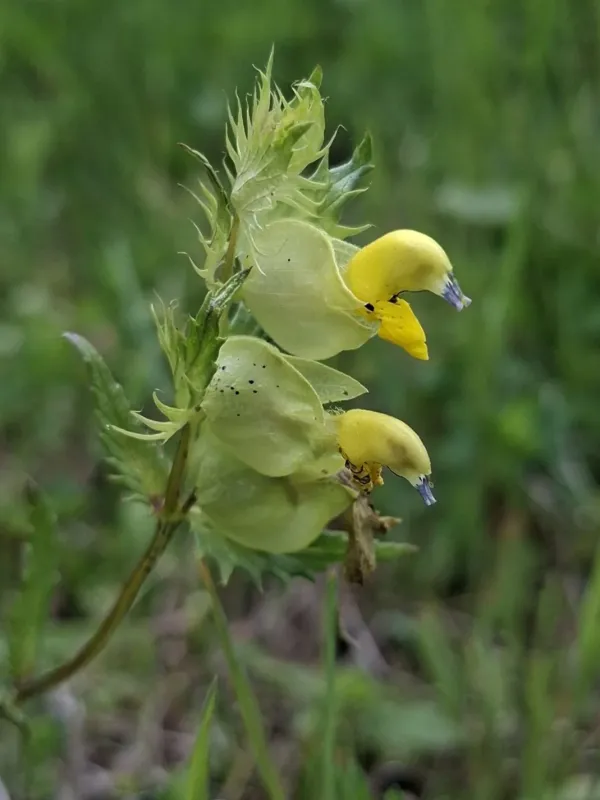
Description
Sowing dates
Rhinanthus glacialis, a member of the Orobanchaceae family, is an annual hemiparasitic herb. Successful propagation requires seeds to undergo a period of cold stratification during the winter months, which is essential to break dormancy before spring germination.
In agricultural practice for grassland restoration, seeds are sown in late autumn directly into the existing sward. Establishing good soil contact is vital; this is usually achieved by light harrowing or rolling the site immediately after overseeding to ensure the seeds are not lost to wind or birds.
Seeding rates must be calibrated according to the desired density of the meadow. As a hemiparasite, the plant naturally limits the growth of vigorous grasses, acting as a biological control agent that promotes higher floral diversity within the pasture.
The optimal sowing time is just before the first permanent snow or frost. This timing prevents premature germination during minor autumn warm spells and ensures the seedlings are ready to emerge as soon as the soil temperatures rise in the spring.
While not a traditional forage crop, the systematic introduction of this species is a recognized technique in ecological farming. It helps revitalize degraded pastures by suppressing dominant grasses and creating niches for other native wildflower species.
Growing requirements
The plant requires well-drained, moderately moist soils with neutral to slightly alkaline pH levels. It thrives in open, sunny environments where competition for light is restricted by regular management, such as seasonal mowing or light grazing.
Ecologically, the plant acts as a hemiparasite, forming haustorial connections with the roots of host plants, typically grasses. Therefore, a healthy population of host plants is a prerequisite for its development, as it derives water and nutrients from them.
Climatic requirements are linked to its alpine and sub-alpine origins. It requires cold winters to complete its life cycle and is adapted to endure significant temperature fluctuations typical of high-altitude ecosystems or northern latitudes.
Site preparation should involve reducing the vigor of existing aggressive grasses. If the grass sward is too thick and dense, the hemiparasite may struggle to establish its root connections in the early stages of its development.
Maintaining soil structure is essential. Excessive fertilization, particularly with nitrogen, favors competitive grass growth and can suppress the colonization of Rhinanthus species, making balanced fertility management crucial for success.
Main diseases and pests
Fungal infections, particularly rusts and powdery mildew, represent the main pathological threats. These pathogens can colonize the foliage during humid conditions, weakening the plant and significantly reducing the quality and quantity of the seed set.
Insect pests that target the reproductive parts, such as seed-feeding moths and beetles, can cause substantial damage. By consuming developing ovaries or seeds, these insects prevent the plant from self-seeding, leading to a decline in population density.
Intensive grazing and improper mowing schedules are the primary human-induced threats. If the meadow is mown or grazed before the plants have successfully matured and dropped their seeds, the annual cycle is broken, leading to site abandonment.
Habitat fragmentation and the encroachment of invasive species can destabilize the complex host-parasite relationships the plant depends on. When the host plant community is compromised, the hemiparasite cannot acquire the necessary resources to thrive.
Waterlogging and extreme droughts are also limiting factors. While the plant is hardy, prolonged periods of soil stress disrupt the efficiency of the root-to-root haustorial transfer, negatively affecting the vigor of the plant and its ability to compete.