
Greater yellow-rattle
Rhinanthus alectorolophus
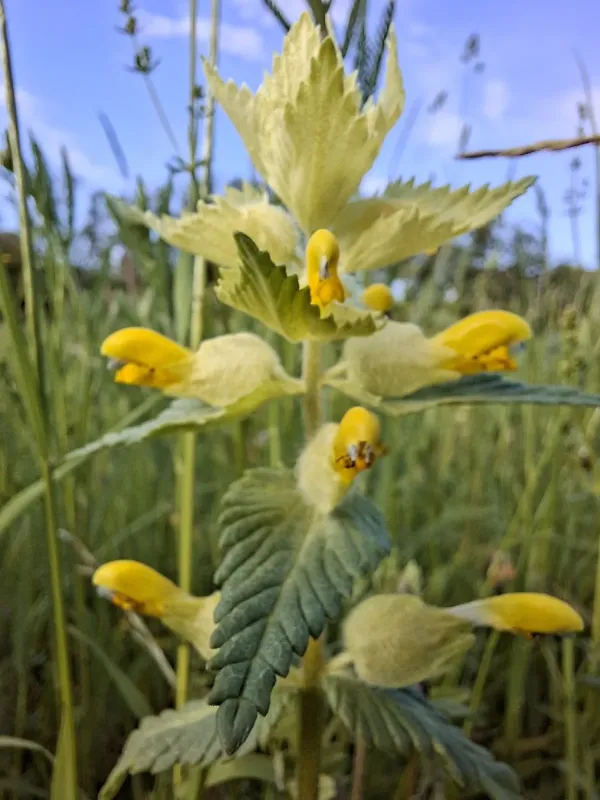
Description
Sowing dates
Greater yellow-rattle is an annual plant that reproduces exclusively via seeds. These seeds require a specific period of cold stratification, which typically happens naturally during the winter months, to break dormancy and ensure germination in the following spring.
Sowing in a managed environment should mimic natural cycles. Seeds are best sown in late autumn, allowing the cold temperatures of the soil to facilitate the germination process. If stored dry, they may lose viability, so keeping them in cool, slightly moist conditions is essential.
Upon germination, the seedling must immediately form a connection with the host plant to survive. This is done through haustoria, root structures that penetrate the host's roots. Without this connection, the seedling will exhaust its limited energy reserves and perish.
Planting density should be carefully managed to avoid over-colonization. Because it is a hemi-parasite, it can significantly alter the balance of meadow plant communities, often suppressing the dominant grasses if the seed bank becomes too dense in the soil.
For conservation or restoration projects, sowing is often done by scattering fresh seed directly onto the targeted grassland after the traditional hay cut. This ensures the seeds reach the soil surface and establish the necessary connections before the following season.
Growing requirements
The plant thrives in moderately moist, nutrient-rich soils. It is frequently found in meadows, pastures, and open woodland margins where it can easily establish connections with a variety of host plants, particularly perennial grasses and legumes.
Climate plays a critical role in its success. Greater yellow-rattle favors temperate zones with sufficient rainfall during the growing season. It cannot survive long periods of drought, as the lack of soil moisture limits its host's root activity and consequently its own survival.
Regarding soil characteristics, the plant is adaptable but prefers neutral to slightly acidic soils. It requires adequate aeration for the development of its root system, which is specialized for searching and attaching to the roots of neighboring vegetation.
Sunlight is an essential factor for the plant's productivity. As a heliophilous species, it requires high levels of solar radiation to produce the energy necessary for flower development and seed ripening. Dense shading from surrounding canopy cover will inhibit its growth.
Human management, such as mowing regimes, has a profound impact. Mowing the meadow after the seeds have ripened but before they have fallen can help control the population, while cutting too early can lead to the total disappearance of the species from the area.
Main diseases and pests
The primary threats to the greater yellow-rattle are fungal pathogens, such as downy mildew and rusts, which can spread rapidly in humid, crowded conditions. These infections often lead to the premature wilting of leaves and stems during the peak flowering stage.
Seed-feeding insects are major threats to reproduction. Larvae of certain moths and beetles can infiltrate the seed capsules, consuming the developing embryos and significantly reducing the number of viable seeds available for the next season.
Competitive stress from aggressive weeds or non-host vegetation can also jeopardize a population. If the density of non-host plants is too high, the yellow-rattle may fail to establish sufficient connections, leading to high seedling mortality rates across the site.
From an agricultural standpoint, the plant itself acts as a threat to yield. By parasitizing forage grasses, it reduces the biomass production of hay fields. Its presence is often considered an indicator of degraded agricultural productivity in intensive farming systems.
Weather-related threats include severe late frosts after spring germination. Despite the plant's hardiness as a seed, the emerged seedlings are tender and highly sensitive to freezing, which can cause significant damage to the season's population if the frost is prolonged.