
Serbian broomrape
Orobanche serbica
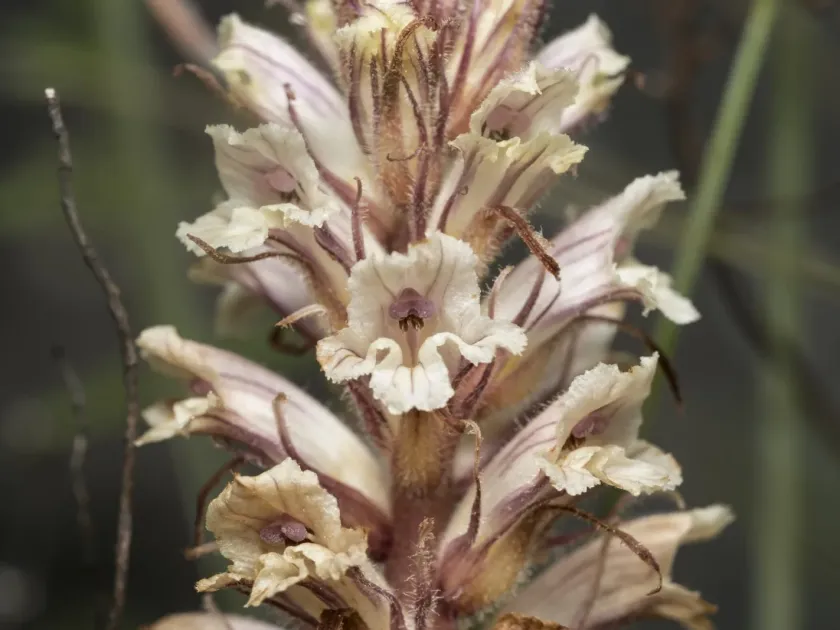
Description
Growing requirements
Serbian broomrape (Orobanche serbica) belongs to the family Orobanchaceae. It is a highly specialized holoparasitic plant that lacks chlorophyll and relies entirely on a host plant for its nutrition and water supply.
The plant is native to the Balkan region. Its biology is characterized by a subterranean life cycle, with stems emerging only to produce flowers and seeds. The vegetative parts remain underground until the plant reaches maturity.
The botanical structure of Serbian broomrape is adapted to its parasitic lifestyle. It develops haustoria—specialized roots that penetrate the host plant's vascular tissue to draw nutrients directly from the xylem and phloem.
This species has specific environmental requirements, favoring well-drained soils and warm climates found in its native distribution range. It typically colonizes areas where its specific host species are abundant.
Agricultural management requires strict phytosanitary practices. The seeds are minuscule and can persist in the soil for many years, making crop rotation and the use of resistant species essential for long-term control.
Main diseases and pests
Serbian broomrape acts as a major stressor for its host plants. By diverting resources, it significantly reduces the host's vitality, which can be detrimental in cases where the host is a valuable plant species or part of a delicate ecosystem.
Insects, particularly those from the Phytomyza genus, act as natural enemies by feeding on the reproductive structures of the broomrape. This biological interaction is crucial for maintaining the ecological balance where the parasite exists.
Various fungal pathogens can infect the broomrape, causing stem rot and significantly reducing seed production. These natural biological controls help in slowing down the spread of the parasite in the wild.
Integrated weed management focuses on reducing the soil seed bank through trap cropping. Growing non-host species that stimulate broomrape germination without allowing it to attach can effectively deplete the seed population over time.
Preventive measures include careful inspection of farming equipment and seed lots to ensure that contaminated material is not moved into non-infested regions, as once established, the parasite is difficult to eradicate.