
Sage broomrape
Orobanche salviae
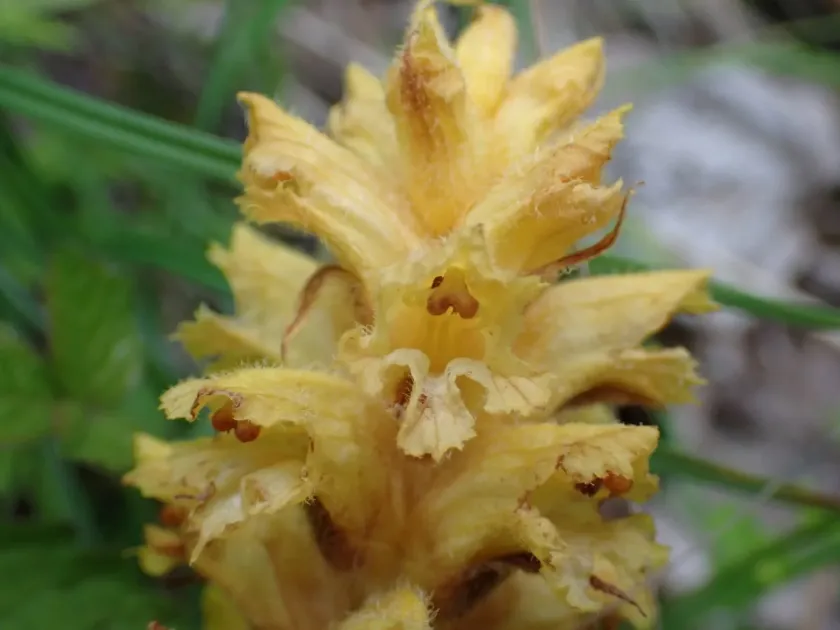
Description
Growing requirements
Sage broomrape (Orobanche salviae) is a specialized holoparasitic plant belonging to the Orobanchaceae family. Lacking chlorophyll, this plant is entirely dependent on its host, primarily species of the Salvia genus, for the acquisition of water, minerals, and carbon compounds.
The geographic distribution of O. salviae is mainly focused on regions with temperate and steppe climates, including parts of Southern Europe and the Caucasus. It thrives in habitats where environmental conditions are favorable for its host plants to establish and grow consistently.
From a botanical perspective, the plant consists of an erect, fleshy stem covered in scale-like leaves. Its most critical feature is the haustorium, a root-like organ that invades the host's vascular tissues to create a physiological bridge between the parasite and the host.
The germination of its seeds is strictly regulated by chemical cues released by the host roots. This evolutionary strategy ensures that the parasite only develops when a suitable host is present, allowing the seeds to remain dormant in the soil for extended periods.
While not a cultivated crop, its impact on local biodiversity and agricultural ecosystems is significant. By diverting essential nutrients from host plants, it stunts their growth, reduces reproductive potential, and can lead to the total collapse of the host plant in heavy infestations.
Main diseases and pests
Managing sage broomrape requires an integrated approach starting with crop rotation. By removing susceptible host plants from a field for several years, farmers can deplete the soil seed bank, as the parasite seeds will fail to germinate and eventually lose viability.
Biological control methods are increasingly recognized for their efficiency in managing Orobanche populations. Insects such as Phytomyza species, which specialize in feeding on the broomrape reproductive organs, are highly effective in reducing the total output of viable seeds.
Cultural practices, including deep plowing, can help bury seeds to depths where they are less likely to germinate or reach the roots of host plants. Additionally, maintaining high soil fertility can sometimes strengthen the host plant's tolerance to parasitic stress.
Early detection is crucial for prevention. Regular scouting of fields during the flowering season of host plants allows for the manual removal and destruction of broomrape stems before they have the opportunity to set seeds and disperse across the area.
Chemical control remains difficult due to the close physiological connection between the parasite and the host. Current efforts focus on developing targeted herbicides that can selectively disrupt the parasite's metabolism without causing toxic effects to the crops being cultivated.