
Greater broomrape
Orobanche rapum-genistae
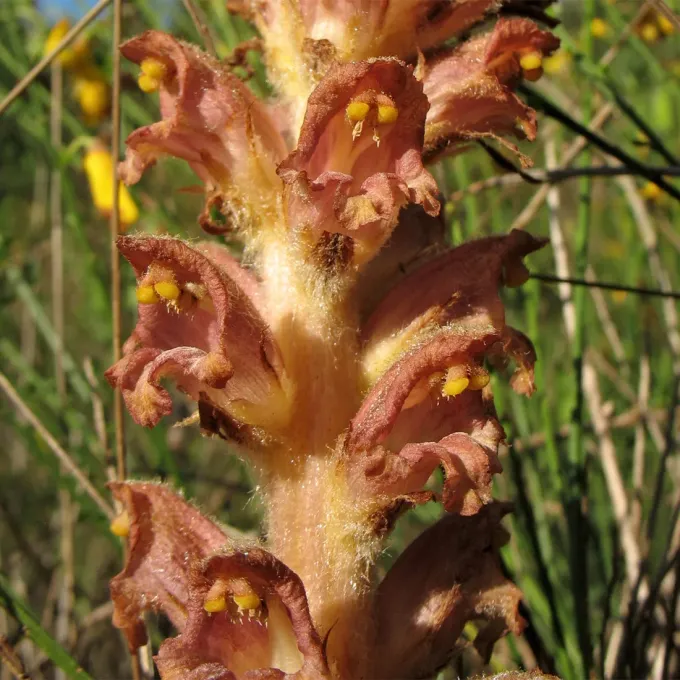
Description
Sowing dates
Greater broomrape is not an agricultural crop, but a parasitic plant belonging to the Orobanchaceae family that acts as a serious weed in leguminous plantings.
As an obligate holoparasite, it lacks chlorophyll and cannot synthesize its own food, forcing it to extract nutrients directly from the roots of its host plants.
The life cycle is triggered by chemical signals released by host roots, which break the dormancy of the broomrape seeds in the soil, allowing the parasite to germinate.
In agronomy, this species is treated as a severe threat to crop health, as it creates a direct parasitic link that depletes the host's vigor and development.
The seeds are incredibly small and numerous, allowing them to remain viable in the soil for extended periods while waiting for a suitable host to establish.
Growing requirements
The plant thrives in regions with well-drained soils, often found in habitats where its primary hosts, such as various species of broom (Genista/Cytisus), are present.
Its natural range encompasses diverse parts of Europe and North Africa, where the climate supports the germination and subsequent development of the parasite.
Successful colonization of a host requires specific soil moisture and temperature conditions, which facilitate the formation of the parasite's haustorium and its root connection.
Crop management strategies focus on preventing colonization through rigorous crop rotation, using non-host species to starve the dormant seed bank.
Soil cultivation practices should be adjusted to prevent the spread of contaminated soil between different fields during the sowing and harvesting seasons.
Main diseases and pests
The primary economic impact of broomrape is the significant reduction in crop yield and quality due to the diversion of nutrients from the host plant to the parasite.
Managing this pest is inherently difficult, as the parasite develops subterranean structures that are protected from contact-based herbicidal treatments.
Integrated pest management (IPM) is essential, combining mechanical removal of flower stalks with the use of host-resistant crop cultivars.
Research into biological control, including fungal pathogens that specialize in attacking broomrape tissues, is ongoing to provide a safer alternative to chemical controls.
Sanitation practices, such as cleaning farm equipment after working in infested areas, are crucial to prevent the accidental distribution of seeds across clean land.