
Picris Broomrape
Orobanche picridis
Description
Growing requirements
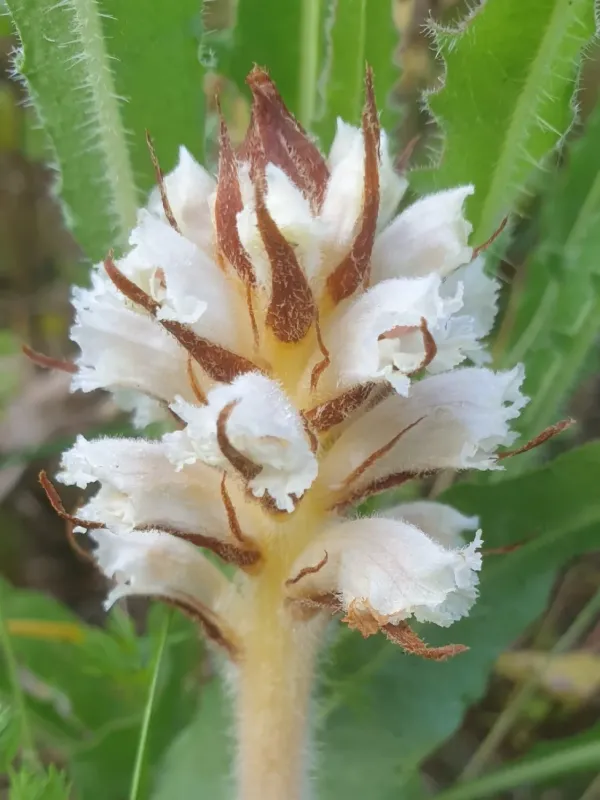
Picris broomrape (Orobanche picridis) is an obligate holoparasitic plant species belonging to the Orobanchaceae family. It is entirely dependent on host plants, typically species from the genus Picris, for its nutritional requirements.
The plant lacks chlorophyll, which makes it incapable of photosynthesis. Instead, it forms specialized root structures called haustoria, which penetrate the host's roots to extract water and nutrients.
Its geographical distribution is primarily focused across Europe, where it inhabits grasslands, meadows, and ruderal areas. It thrives in well-drained soils and requires stable environmental conditions to complete its subterranean development cycle.
Botanically, the plant is characterized by a fleshy, scale-leaved stem and a spike of flowers that bloom during late spring and summer. Its reproductive strategy relies on the production of microscopic seeds that can persist in the soil for several years.
In an agricultural context, this species is considered a botanical hazard rather than a crop. While it is not a direct threat to major commodity crops like sunflowers, it acts as a competitor and a host for various diseases and pests that may affect the field ecosystem.
Main diseases and pests
The management of Orobanche picridis relies heavily on preventing seed bank formation in the soil. Once established, the parasitic plant is difficult to eradicate due to the longevity of its seeds.
Biological control agents, such as specific weevils and flies that feed on the broomrape reproductive organs, are studied as natural regulators of the population.
Fungal pathogens represent significant threats to the broomrape, especially under conditions where excess moisture leads to stem rot of the flowering spikes.
Crop rotation remains the most effective agricultural strategy to disrupt the life cycle of this parasite by eliminating host plants for several consecutive seasons.
Chemical control involving selective herbicides is occasionally employed, but must be carefully managed to avoid damaging the surrounding vegetation or non-target flora.