
Orobanche pancicii
Orobanche pancicii
Description
Main diseases and pests
Orobanche pancicii is a specialized parasitic plant species belonging to the Orobanchaceae family. It is an achlorophyllous organism, meaning it lacks chlorophyll and cannot perform photosynthesis, thus relying entirely on host plants to obtain water, minerals, and essential carbohydrates for its survival and development.
The native distribution range of this species is primarily found in the Balkan Peninsula. It is highly adapted to local environments, and its seeds possess an extraordinary longevity, remaining viable in the soil for many years until they detect root exudates from a potential host plant, which triggers the germination process.
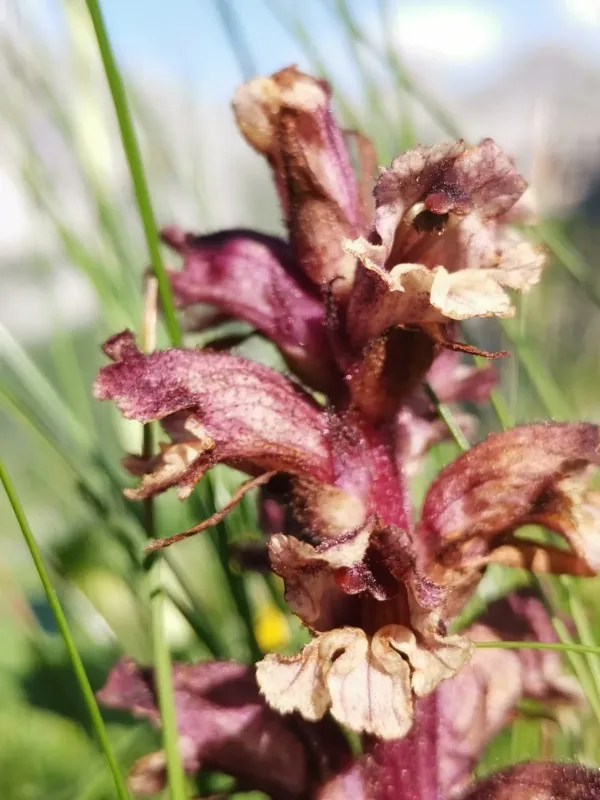
Botanically, the plant is characterized by a fleshy stem that emerges above ground during the flowering season, topped with dense, spike-like inflorescences. The lack of green pigmentation gives it a distinctive brownish or yellowish appearance, making it easily distinguishable from typical autotrophic weeds present in agricultural fields.
The parasitic nature of Orobanche pancicii causes significant economic damage to agricultural systems. By penetrating the root system of host crops through structures called haustoria, the parasite siphons off vital nutrients. This leads to severe physiological stress in the host, resulting in stunted growth, chlorosis, and a substantial reduction in total yield potential.
Management strategies for this parasite include strict quarantine protocols to prevent seed dispersal, as well as integrated pest management (IPM) practices. Farmers often utilize crop rotation with trap crops that stimulate germination without allowing the parasite to complete its life cycle, thereby depleting the soil seed bank and mitigating the threat to future seasons.