
Orobanche olbiensis
Orobanche olbiensis
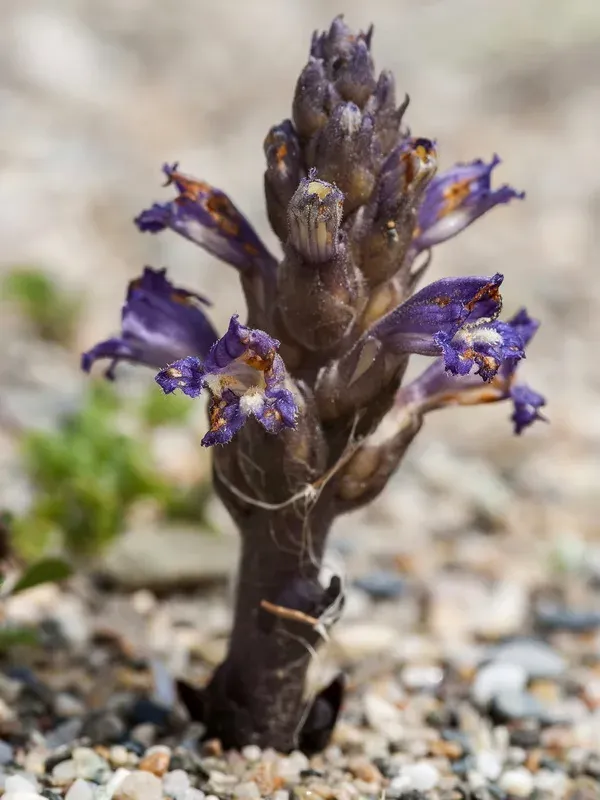
Description
Growing requirements
Orobanche olbiensis is a specialized parasitic plant species belonging to the Orobanchaceae family. As an obligate parasite, it lacks chlorophyll and cannot perform photosynthesis, requiring a host plant to supply water and nutrients for its survival and growth.
The morphology of the plant consists of a fleshy, unbranched stem that emerges above ground only during the flowering stage. The root system is vestigial, functioning primarily as a connection mechanism through haustoria that penetrate the host plant's vascular tissue.
The distribution of this species is largely determined by the presence of specific host plants, often within the Asteraceae family. It thrives in arid and semi-arid climates where soil temperatures are sufficient to facilitate the germination of seeds in response to host-derived chemical stimuli.
Environmental requirements include well-drained soils and an adequate density of host roots. The seeds of Orobanche olbiensis are extremely small and can remain viable in the soil seed bank for many years until the right conditions and chemical signals occur.
In agricultural practice, this plant is considered a significant threat to crop yields. Effective management requires the use of trap crops, deep tillage to reduce seed density, and the implementation of resistant cultivars to disrupt the lifecycle of the parasite.