
Orobanche laserpitii-sileris
Orobanche laserpitii-sileris
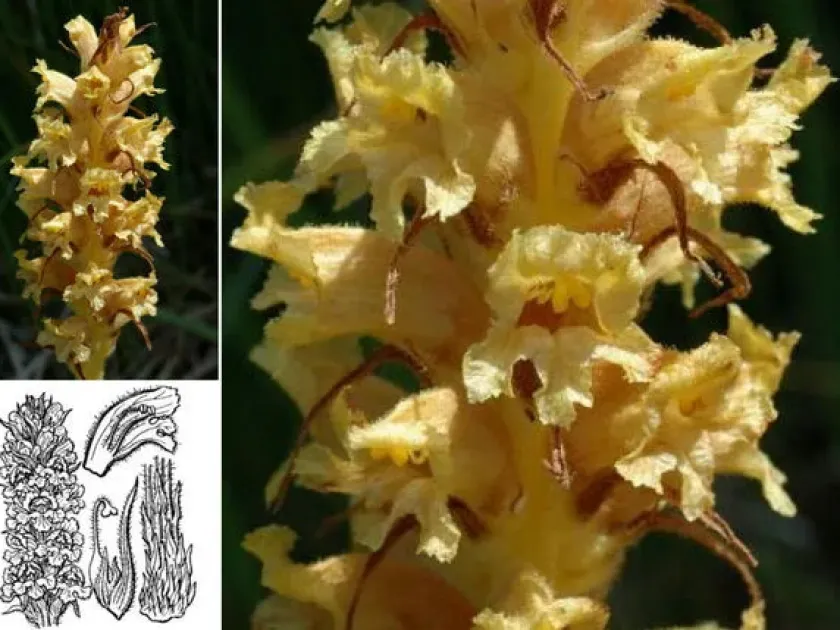
Description
Growing requirements
Orobanche laserpitii-sileris is an obligate parasitic plant species belonging to the Orobanchaceae family. As a holoparasite, it lacks chlorophyll completely and relies entirely on its host plants from the Apiaceae family for water and essential nutrients, which it extracts via specialized haustorial connections.
The geographical distribution of this species is largely centered in European mountain and sub-mountain regions. It is highly adapted to specific ecological niches where its host plants naturally thrive, demonstrating a high degree of biological specialization within the local flora.
Morphologically, the plant is characterized by a fleshy, upright stem with scale-like leaves and a complex root system adapted to penetrate the tissues of the host. Its biological cycle is tightly synchronized with the vegetative rhythm of its preferred host species.
The environmental requirements include well-drained, fertile soils that support the vigorous growth of host plants. Moisture availability is critical for the germination of its microscopic seeds, which remain dormant in the soil until triggered by specific chemical exudates from host roots.
Agronomic management is primarily focused on preventive measures. Implementing long-term crop rotation cycles that remove sensitive hosts from the field is the most effective way to deplete the soil seed bank of the parasite over several seasons.
Main diseases and pests
While serving as a parasitic pest, Orobanche laserpitii-sileris itself is susceptible to various fungal pathogens. Species from the Fusarium genus, among others, can colonize the stem and root tissues of the broomrape, effectively acting as natural control agents in stable ecosystems.
Several specialized insect species, including dipterans and coleopterans, are known to feed on the flower buds and capsules of broomrape. By destroying the reproductive parts of the plant, these insects play a significant role in reducing the seed output of the parasite.
In agricultural settings, the main threat posed by the broomrape is the significant reduction in host crop vigor and yield. The extraction of nutrients and water by the parasite leads to premature wilting and reduced development of the host plant's root and leaf systems.
Control strategies often involve a combination of chemical and mechanical methods. Hand-pulling of the broomrape before it reaches the flowering stage is highly recommended to prevent the release of seeds, which can persist in the soil for an extended duration.
Integrated pest management (IPM) for this parasite includes the use of resistant crop varieties and the application of synthetic germination stimulants. These stimulants induce premature germination of the parasite seeds in the absence of a host, leading to their subsequent death.