
Kurdish broomrape
Orobanche kurdica
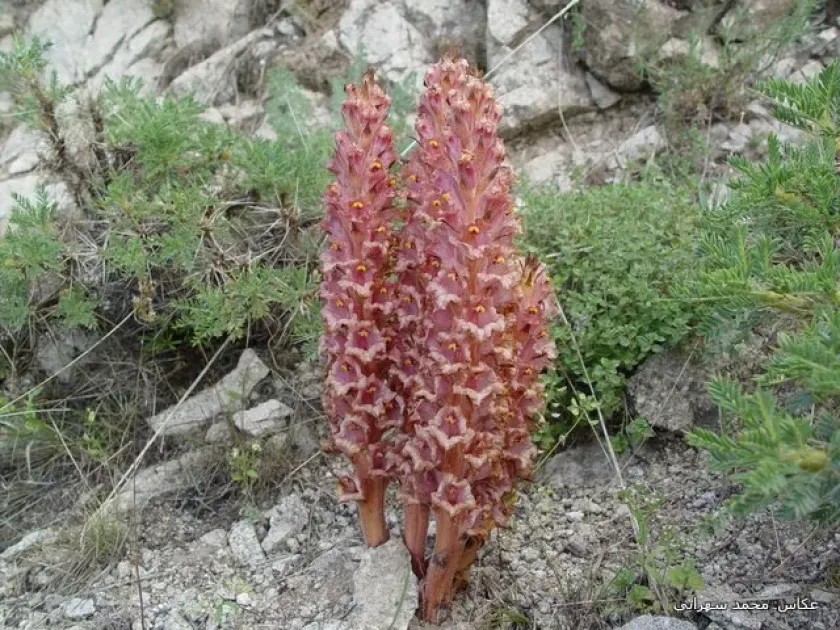
Description
Growing requirements
Kurdish broomrape (Orobanche kurdica) is a parasitic plant belonging to the Orobanchaceae family. It is an obligate parasite, meaning it cannot complete its life cycle without a suitable host plant.
The plant is native to the arid and semi-arid regions of the Middle East, specifically the mountainous terrains where its hosts naturally occur. It has evolved to survive in harsh, dry climates by tapping into the nutrient supply of host roots.
Botanically, Orobanche kurdica is characterized by an unbranched or slightly branched stem lacking chlorophyll. The plant appears above ground only during the flowering stage, producing numerous tiny seeds that can remain dormant in the soil for years.
Soil requirements are relatively flexible, provided the host plant is thriving. However, the germination of its seeds is strictly dependent on the chemical signals (exudates) released by the roots of the specific host plant.
Agricultural practices to manage this parasite focus on crop rotation and the selection of resistant cultivars. By alternating hosts with non-host crops, farmers can effectively deplete the seed bank of broomrape in the soil over several seasons.
Main diseases and pests
The primary threat posed by Kurdish broomrape is the significant reduction in crop yield. By siphoning off water and nutrients, the parasite weakens the host, leading to stunted growth and, in severe cases, plant death.
Diseases in infested crops are more prevalent, as the physical damage to the root system created by the broomrape haustoria provides entry points for various soil-borne pathogens, including fungi and bacteria.
Insects such as the Phytomyza species serve as natural control agents, as their larvae feed on the developing ovaries of the broomrape, effectively preventing the production of new seeds.
Control strategies also involve strict sanitation of farming equipment, as microscopic seeds can easily adhere to machinery and be transported to uninfected fields. Early detection and mechanical removal of emerging stalks are essential.
While chemical control remains challenging due to the intimate connection between the parasite and the host, some selective herbicides are being studied for use in specific cropping systems to inhibit parasitic attachment.