
Orobanche inexspectata
Orobanche inexspectata
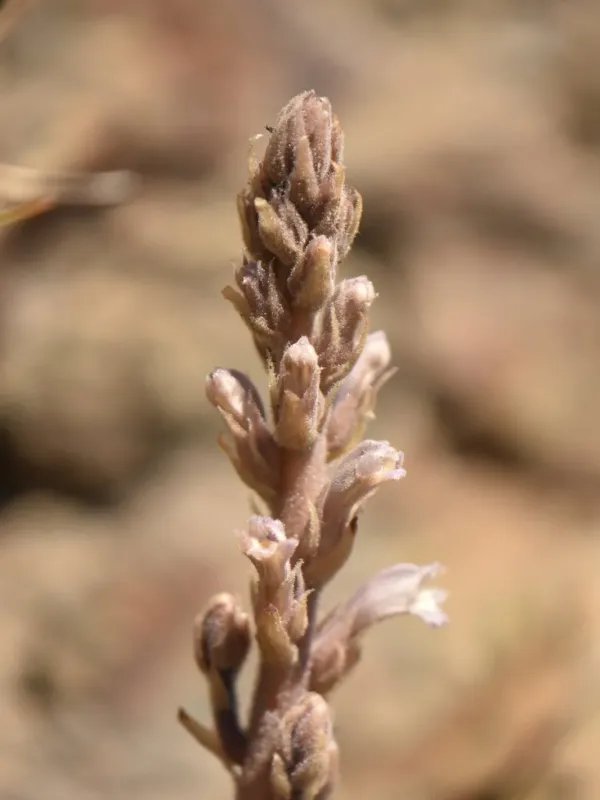
Description
Growing requirements
Orobanche inexspectata belongs to the Orobanchaceae family. It is a specialized parasitic plant that lacks chlorophyll and does not perform photosynthesis, making it entirely dependent on its host plant for survival and reproductive cycles.
This species functions as an obligate parasite, anchoring itself to the host's root system using haustoria. Through these organs, it draws water, minerals, and organic compounds directly from the donor plant's vascular system, ensuring its own growth.
The natural range of Orobanche inexspectata is primarily found within specific ecosystems of Eastern Europe. It typically occupies niches within grasslands or steppe habitats where its specific host species are naturally abundant and healthy.
Soil requirements for this parasite are defined by the host plant's needs. The soil must provide optimal conditions for the host to thrive, thereby ensuring that the parasite can establish a strong and effective connection for nutrient extraction.
Climate factors are essential for the germination process of this plant. Seeds require precise chemical cues, often in the form of strigolactones, released by the host roots, combined with specific temperature regimes to break dormancy and trigger the germination process.
Main diseases and pests
Habitat loss represents the primary threat to Orobanche inexspectata. Human activities such as intensive farming and the conversion of grasslands into agricultural land threaten the populations of host plants, which in turn leads to the decline of the parasite.
Unlike other members of the Orobanche genus that are significant agricultural pests causing economic loss, this specific species is generally not considered a threat to commercial farming due to its specialized nature and rare occurrence.
Various fungal pathogens can affect this parasitic plant, particularly in humid conditions. These pathogens can cause stem rot and significantly reduce the overall seed yield, impacting the plant's long-term population stability.
Insect herbivores that have co-evolved with Orobanche species serve as natural regulators of the population. These insects feed on the stems and reproductive structures, effectively limiting the spread of the plant within its natural environment.
Changes in local hydrological conditions pose a long-term risk. Droughts and the alteration of groundwater levels negatively impact the physiological vigor of the host, rendering it incapable of supporting the parasitic load required by Orobanche inexspectata.