
Orobanche haenseleri
Orobanche haenseleri
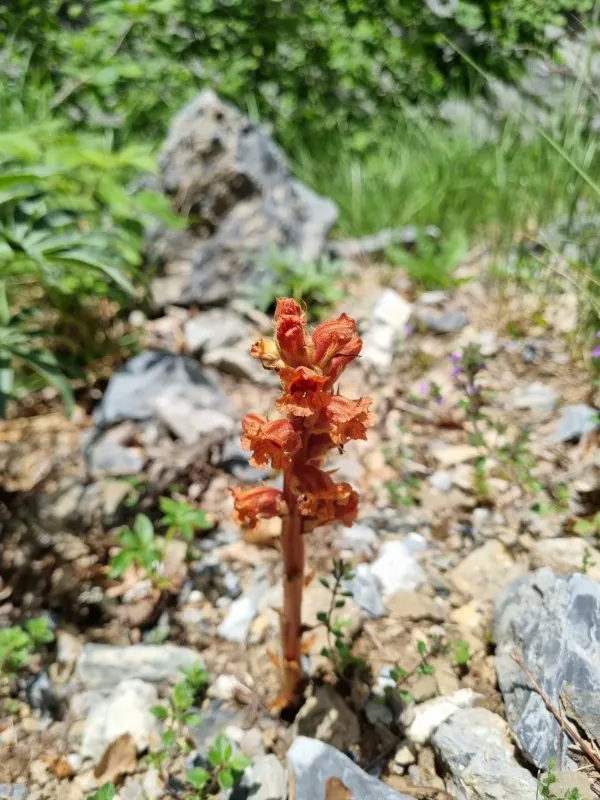
Description
Growing requirements
Orobanche haenseleri is a specialized root parasite belonging to the Orobanchaceae family, entirely lacking chlorophyll for photosynthesis.
This species is not a crop but a parasitic weed that depends on a host plant to fulfill its nutritional needs throughout its life cycle.
It is primarily found in the Mediterranean basin, with documented populations occurring in habitats across the Iberian Peninsula.
The plant thrives in dry, open environments where the presence of specific host roots triggers the germination of its microscopic seeds in the soil.
As a non-photosynthetic organism, it possesses a unique morphology characterized by an erect stem covered in scale-like leaves and terminal inflorescences.
Main diseases and pests
The primary impact of this species is the competition for resources, as it siphons water and nutrients directly from the vascular system of the host plant.
Infection by this parasite leads to significant yield losses, stunted growth, and a overall decline in the health of the infested agricultural or wild plant community.
Management strategies involve the implementation of long-term crop rotation and the destruction of infected host plants before seed production begins.
Biological control methods are still being researched, focusing on specialized insects that can feed on various species within the Orobanchaceae family.
Prevention remains the most effective strategy, requiring rigorous monitoring of field boundaries and soil management to limit the accumulation of the parasite's seed bank.