
Orobanche foetida
Orobanche foetida
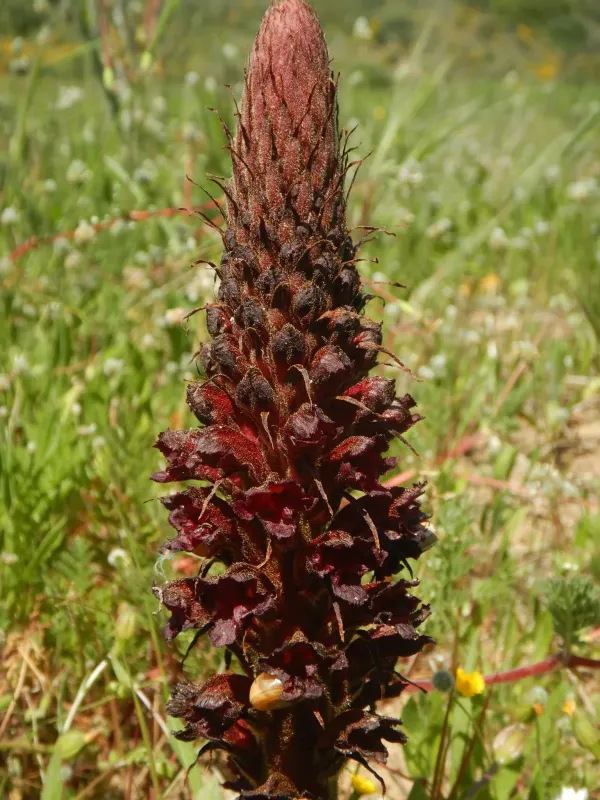
Description
Main diseases and pests
Orobanche foetida is a specialized root parasitic plant belonging to the Orobanchaceae family. As an obligate parasite, it lacks chlorophyll and relies entirely on host plants for water, minerals, and essential photosynthetic products, making it a severe agricultural pest.
The plant attaches to the roots of the host using specialized organs called haustoria. These structures penetrate the host's vascular system, causing significant physiological stress, stunting development, and leading to substantial yield losses in susceptible crops such as faba beans and other legumes.
The distribution of Orobanche foetida is primarily concentrated in Mediterranean regions, including parts of North Africa and Southern Europe. Its ability to produce thousands of minute, long-lasting seeds allows it to persist in the soil for over a decade, waiting for the germination signals from a suitable host.
Botanically, it appears as an unbranched stem measuring 10–40 cm in height, bearing scale-like leaves. The inflorescence consists of tubular flowers that emit a distinctly foul odor, which facilitates pollination by insects and subsequent development of massive quantities of viable seeds.
Management strategies focus on long-term soil health and integrated pest management (IPM). Key tactics include crop rotation with non-host species, application of specific herbicides during the pre-emergence phase, and the development of genetically resistant crop varieties to mitigate the impact of this destructive parasite.