
Moringa ovalifolia
Moringa ovalifolia
Description
Growing requirements
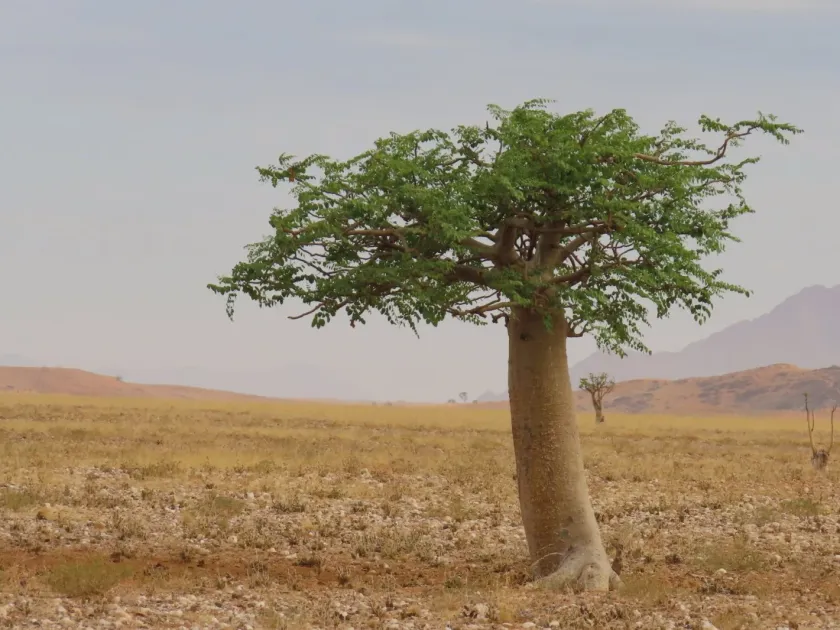
Moringa ovalifolia is a succulent tree species belonging to the Moringaceae family, native to the arid landscapes of Namibia and southwestern Angola.
Characterized by its distinctive bottle-shaped trunk, this plant is an evolutionary master of water storage, allowing it to survive in environments where rainfall is scarce and highly irregular.
Successful cultivation requires a climate with high solar irradiance and significant protection from frost, as the species is not cold-hardy and will suffer immediate tissue damage at freezing temperatures.
Soil requirements are strictly tied to drainage; the tree thrives in coarse, rocky, or sandy soils where water infiltration is rapid and the risk of root pathogens is minimized.
In a controlled agricultural setting, one must provide ample spacing between specimens to allow for the expansion of the trunk and to ensure proper airflow, which prevents fungal outbreaks.
Main diseases and pests
- Root rot caused by poor soil drainage.
- Fungal infections during periods of high humidity.
- Larval infestations targeting soft leaf tissue.
- Stem borers that exploit the succulent bark.
- Damping-off in young seedlings under excessive moisture.
Harvesting
The economic utility of Moringa ovalifolia is largely focused on the high-value oils extracted from its seeds, which are prized for their stability and oxidative resistance.
Beyond oil production, the foliage is traditionally utilized for its nutritional properties, providing a significant source of vitamins and minerals in regions with limited food variety.
Harvesting strategies involve manual picking of the mature, woody seed pods, usually done toward the end of the dry season when the pods are naturally desiccated.
Care must be taken during the harvesting process to avoid scarring the soft, succulent bark, as wounds in the trunk take a long time to heal and can become entry points for pests.
Given the slow growth rate of the species, large-scale harvesting requires sustainable management practices to ensure that the natural populations are not depleted by commercial demand.