
Preissia quadrata
Preissia quadrata
Description
Growing requirements
Preissia quadrata is a species of thalloid liverwort belonging to the family Marchantiaceae. While it is not an agricultural crop, it is an essential organism in bryology and plays a significant role in stabilizing specific damp habitats. It is recognized by its distinct thallus structure that reflects its evolutionary adaptation to moist environments.
The plant is widely distributed across the temperate and arctic regions of the Northern Hemisphere. It thrives in habitats characterized by constant moisture, such as limestone cliffs, wet riverbanks, and rocky crevices. Its presence is often linked to the seepage of mineral-rich water, highlighting its specific ecological niche preferences.
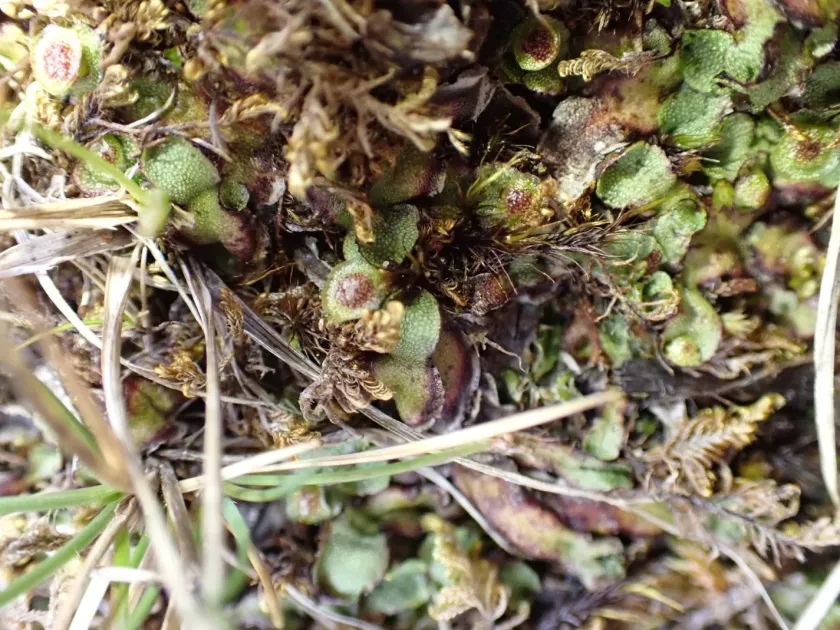
Botanically, Preissia quadrata consists of flat, dichotomously branched thalli. A key feature is the presence of distinct pores on the surface, which lead to air chambers beneath the epidermis, facilitating gas exchange in the high-humidity conditions where the plant resides. The color is typically deep green to glaucous, providing efficient photosynthesis under low light.
Environmental requirements for this liverwort are highly specialized, necessitating consistent high moisture levels and a neutral to alkaline substrate. It is a calcicole, meaning it favors soils or rocks rich in calcium carbonate. Due to these strictly natural requirements and its slow growth rate, the plant is not suitable for, nor used in, commercial crop production.
Ecologically, Preissia quadrata serves as a pioneer species on eroded soils and rocky outcrops. It contributes to moisture retention and soil development, effectively preparing the ground for more complex vegetation. It is also a valuable bioindicator, as its health and distribution provide insights into the local water quality and the mineral composition of the surrounding substrate.