
Silene thymifolia
Silene thymifolia
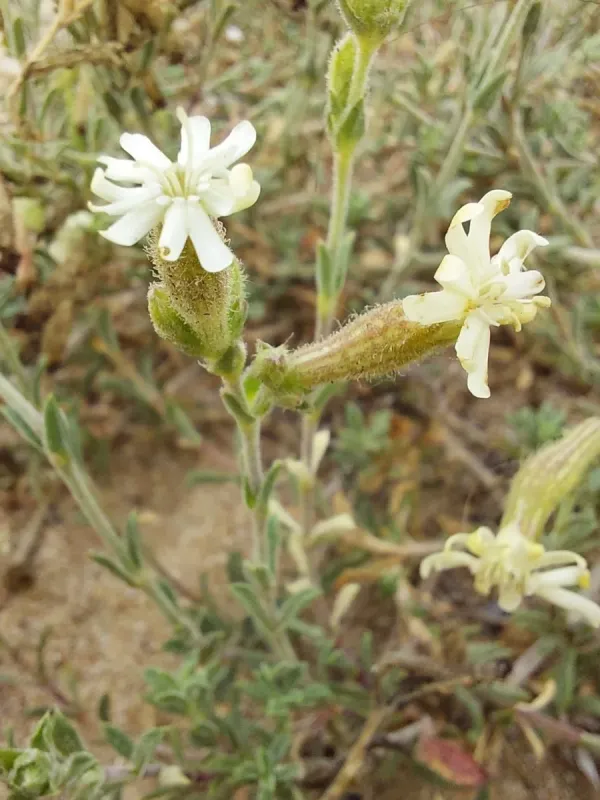
Description
Growing requirements
Silene thymifolia is a perennial herbaceous plant belonging to the Caryophyllaceae family. It is a highly specialized species that has evolved to thrive in rigorous environmental niches, particularly within coastal and steppe habitats where soil conditions are often challenging for general vegetation.
The native distribution of this species is centered around the Northern Black Sea region and the Crimean Peninsula. It typically inhabits sandy substrates, coastal dunes, and saline soils, demonstrating a high level of tolerance to salt concentrations that would be toxic to most standard agricultural crops.
Botanically, the plant is characterized by its prostrate or ascending stems and narrow, thyme-like leaves. This foliage structure, from which the specific epithet 'thymifolia' is derived, serves as an adaptation to minimize water loss through transpiration in hot, wind-exposed environments.
Regarding environmental requirements, Silene thymifolia demands full solar exposure and exceptionally well-drained soil. In a horticultural or experimental setting, it is critical to avoid waterlogging, as the root system is evolved for coarse-textured, sandy soils rather than heavy loams or nutrient-dense agricultural substrates.
While not a traditional broad-acre crop, this plant holds significant value for agricultural science. Its genetic profile offers insights into salt and drought tolerance, making it a potential subject for research aimed at improving stress resistance in related crops. Its low-maintenance nature also makes it suitable for xeriscaping and ecological restoration projects.