
Gypsophila collina
Gypsophila collina
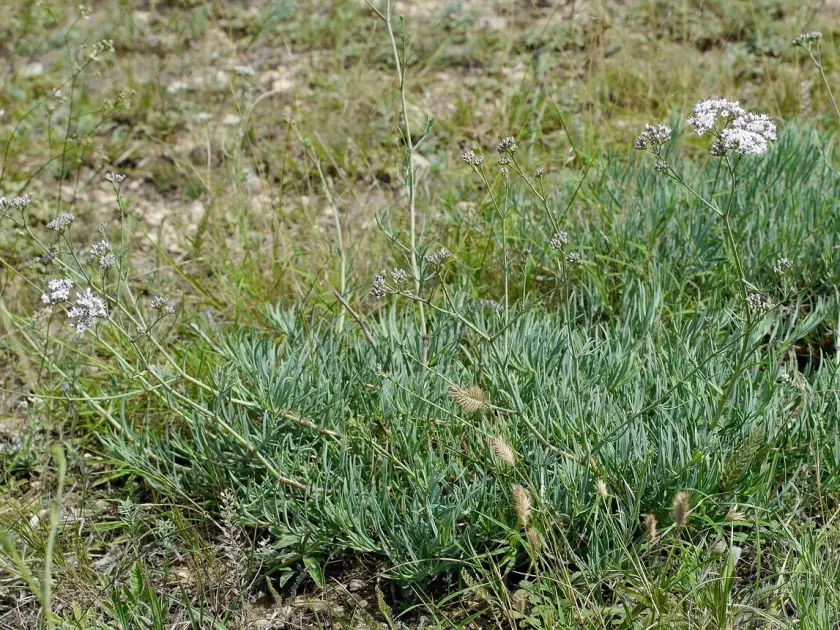
Description
Sowing dates
The sowing of Gypsophila collina is primarily carried out in the spring when soil temperatures reach 10–12 degrees Celsius. The optimal time is late April or early May, allowing seeds to utilize moisture accumulated from melting snow.
The seeds of this crop are known for high germination rates but require shallow sowing depth, no more than 1–2 centimeters. Surface sowing helps prevent seedling failure in compacted soil layers.
Autumn sowing is also possible, which provides natural stratification for the seeds. This contributes to more uniform and robust germination during the following spring season.
In large-scale production, row sowing is practiced with spacing between 45 and 60 centimeters. Such distance is necessary for effective mechanical weed control throughout the growing season.
After the first two pairs of true leaves appear, thinning is mandatory. The optimal stand density for the plants is approximately 8–10 specimens per linear meter of the row.
Growing requirements
Gypsophila collina belongs to the Caryophyllaceae family and is a classic xerophyte, perfectly adapted to the arid conditions of steppe and forest-steppe zones. The plant prefers open, well-lit areas.
The crop has moderate requirements regarding soil composition, favoring light sandy loam or rocky soils with good drainage. It is highly sensitive to waterlogging and excessive soil moisture around the root system.
The plant develops best in soils with a neutral or slightly alkaline pH. On acidic soils, the plant exhibits stunted growth and often fails to thrive in its first year of life.
A crucial requirement is the absence of high competition from perennial rhizomatous weeds. At the beginning of vegetation, Gypsophila collina grows relatively slowly, necessitating regular weeding.
The crop possesses high frost resistance and can withstand severe winters when protected by a snow cover. However, in the absence of snow, root damage may occur in extremely dry winter regions.
Yield
The productivity of Gypsophila collina directly depends on the age of the plantation and the quality of care. In the first year of life, the plant primarily forms a basal rosette, resulting in minimal biomass harvest.
The root of the plant, which contains high levels of saponins, is the primary economic asset. Harvesting roots is best conducted in the 3rd or 4th year of vegetation when the root achieves maximum size.
The average yield of dry roots per hectare ranges from 1.5 to 2.5 metric tons under optimal agronomic practices. Supplemental irrigation during drought periods can increase yields by 20–30 percent.
The above-ground biomass (the herb) also finds utility as a decorative floristic material and medicinal raw material. Harvesting of the above-ground mass is performed during the peak flowering stage.
To maintain consistent plantation yields, crop rotation is recommended, avoiding replanting the culture on the same site for at least 5–7 years to prevent soil exhaustion.
Main diseases and pests
Gypsophila collina is generally resistant to major agricultural pests; however, under high humidity conditions, it is susceptible to fungal infections such as root rot.
Poor soil aeration and high stand density can lead to the development of powdery mildew on the leaves. Prevention involves maintaining proper ventilation and applying fungicides in cases of severe infection.
Among insects, leaf-eating pests pose the greatest danger, particularly during the seedling phase. Standard agricultural control includes weed removal, which often acts as a reservoir for such pests.
Nematodes may attack the roots during long-term cultivation on the same plot. Crop rotation and the use of healthy planting material are essential preventive measures.
The use of chemical plant protection agents must be strictly regulated, as Gypsophila is often used as medicinal raw material where residual pesticide levels are strictly prohibited.
Harvesting
Harvesting the above-ground biomass is performed mechanically using mowers during full bloom. After cutting, the raw material is dried in shaded areas or specialized drying chambers to 12–14 percent moisture.
Root harvesting is the most labor-intensive process, requiring deep soil tillage using plows or specialized root diggers. The optimal time is autumn, before the onset of permanent frost.
The excavated raw material is cleaned of soil residues, damaged parts are removed, and the roots are washed in running water. Thorough cleaning is necessary to obtain a high-quality standardized product.
After washing, roots are cut into segments to accelerate the drying process. Drying temperatures must not exceed 50–60 degrees Celsius to preserve the integrity of the active compounds, specifically saponins.
Finished raw material is stored in dry, well-ventilated warehouse facilities in bags or bales. Protecting the stock from moisture and rodents is vital, as Gypsophila roots are highly hygroscopic.