
Arenaria mairei
Arenaria mairei
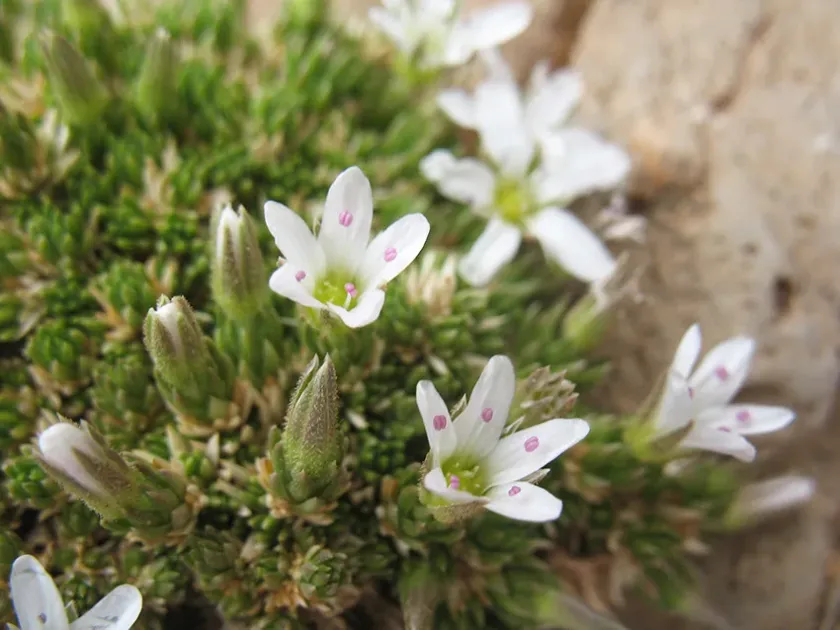
Description
Sowing dates
Sowing of Arenaria mairei is best performed in autumn or early spring after the seeds have undergone a cold stratification period. Seeds should be surface-sown, as they require sufficient light exposure to initiate the germination process successfully.
When sowing in spring, containers should be kept in a cool environment, ideally between 5 to 10 degrees Celsius. It is crucial to maintain steady moisture levels in the substrate without allowing it to become waterlogged or completely dry out during the germination phase.
While the plant propagates naturally by seeds, vegetative division is a common practice in cultivation to maintain specific clonal lines. The best time for dividing established clumps is early spring, immediately before the plant resumes its main growth cycle.
To establish a uniform carpet or ground cover, a planting density of approximately 12-15 plants per square meter is recommended. This spacing ensures proper airflow between individual plants while allowing them to form a cohesive mat that suppresses weed emergence.
In large-scale production, seed priming or pre-treatment with growth stimulants may be employed to improve uniformity. However, the most effective method remains mimicking natural temperature fluctuations to ensure healthy and robust seedling development.
Growing requirements
Arenaria mairei, a member of the Caryophyllaceae family, requires excellent soil drainage for optimal development. As the species naturally inhabits rocky scree environments, it demands a loose, gritty substrate enriched with sand and small gravel to avoid moisture retention.
The plant is highly heliophilic and requires full sun exposure throughout the day. In shaded areas, stems tend to become etiolated and lose their natural compact form, which significantly reduces the plant's overall health and aesthetic appeal.
This species is highly adapted to arid conditions and low temperatures, characteristic of its native high-altitude habitat. However, it is extremely sensitive to excessive soil moisture, which can quickly lead to root rot and fatal damage to the specimen.
The ideal soil pH should be neutral to slightly alkaline. Heavy clay or silt soils are unsuitable unless thoroughly amended with drainage agents like pumice or perlite to change their physical structure and improve aeration in the root zone.
For container-grown plants, proper ventilation is essential to maintain root health. Growers must avoid standing water in saucers or trays, as even brief periods of waterlogging can be detrimental to the fine root system of this alpine perennial.
Main diseases and pests
Root rot is the most significant threat to Arenaria mairei, typically resulting from over-irrigation or inadequate drainage. Prevention strategies involve rigorous moisture management and the use of well-draining mineral-based soil mixes to keep the crown dry.
Pests such as aphids and spider mites may occasionally infest the plants, particularly during hot and dry weather. Implementing integrated pest management, including the use of systemic insecticides, is effective in protecting the crop from significant damage.
Fusarium wilt can impact weakened plants or those growing in suboptimal conditions. Ensuring healthy plant stock and applying prophylactic fungicide treatments are standard practices to prevent the spread of soil-borne pathogens within the growing area.
Slugs and snails can cause cosmetic and structural damage by feeding on the soft, succulent foliage during moist spring months. Protective barriers or organic slug baits are recommended for maintaining plant integrity in vulnerable garden environments.
Powdery mildew may develop in areas with stagnant air and high humidity. To prevent fungal outbreaks, growers should ensure proper spacing between plants and provide good airflow, which is critical for maintaining healthy and vigorous Arenaria populations.