
Cordia millenii
Cordia millenii
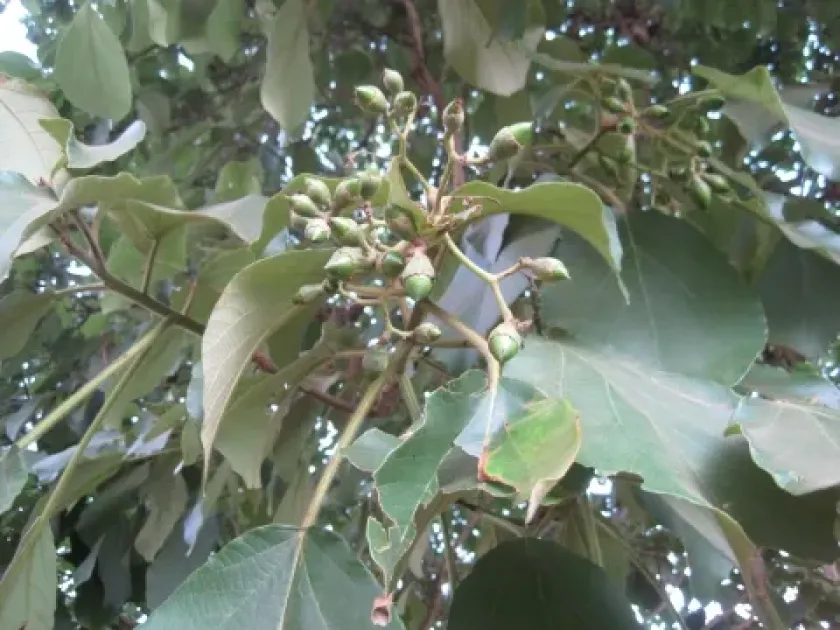
Description
Sowing dates
Propagation of Cordia millenii is typically achieved through seeds, which require careful handling and treatment to ensure high germination rates before sowing.
Sowing should ideally take place at the beginning of the rainy season, allowing the seeds to benefit from consistent natural moisture during the critical germination phase.
Nursery practices involve using a light, well-draining substrate to support root development, which is vital for the survival of seedlings once they are transferred to the field.
Seedlings are transplanted to their permanent locations once they are sufficiently hardy, usually during the wet season to prevent moisture stress.
Maintaining proper spacing between seedlings is essential to promote straight trunk development and to ensure that each tree has access to sufficient nutrients and sunlight.
Growing requirements
Cordia millenii is native to the tropical regions of West and Central Africa, where it thrives in moist, forest-like environments with high humidity.
The tree requires deep, fertile, and well-drained soils, as it is highly sensitive to waterlogging which can lead to root rot and other health issues.
It prefers climates with distinct but not overly long dry seasons, as extreme drought can significantly hinder growth rates and overall biomass accumulation.
While the tree is light-demanding as it matures, it can benefit from partial shade during its initial growth stages to encourage vertical growth.
Optimal environmental management involves selecting sites that mimic its natural habitat, including sufficient protection from strong, desiccating winds.
Yield
The yield of this culture is assessed primarily by the volume and quality of high-grade timber produced over a long-term harvesting rotation.
Growth rates are generally robust under favorable tropical conditions, making it a viable species for sustainable forestry and plantation projects.
Yield management requires systematic maintenance, including pruning lower branches to ensure the development of a clean, knot-free trunk for industrial use.
The economic value of Cordia millenii is driven by its strong, durable wood, which is highly prized for cabinetry, furniture, and decorative paneling.
Yields are maximized by integrating the species into managed agroforestry systems, where the tree contributes to nutrient cycling and soil improvement.
Main diseases and pests
The species is susceptible to various pests, particularly wood-boring insects that can damage the trunk, affecting both the health of the tree and the quality of the timber.
Fungal diseases are a primary threat in humid climates, often targeting the foliage or the root system if drainage conditions are not maintained properly.
Effective management includes regular inspection and the use of integrated pest control methods to minimize the impact of biological stressors.
Early-stage protection against local fauna and environmental damage is crucial for ensuring the successful establishment of a new plantation.
- Trunk-boring insect infestations
- Fungal root pathogens
- Defoliation by caterpillars
Harvesting
Harvesting Cordia millenii involves selective logging based on target trunk diameters, ensuring that only mature trees are removed to maintain forest sustainability.
Proper harvest techniques, including precise cutting and immediate post-harvest processing, are essential to minimize wood waste and preserve its market value.
The timber requires a controlled drying process, often involving air-seasoning in protected environments, to prevent splitting or distortion of the wood planks.
Industrial processing transforms the raw logs into high-value products, leveraging the wood's inherent durability, grain, and attractive color characteristics.
Reforestation efforts must immediately follow the harvest, ensuring that the next generation of trees is planted to maintain the ecosystem balance and production flow.