
Michaux's sumac
Rhus michauxii
Description
Growing requirements
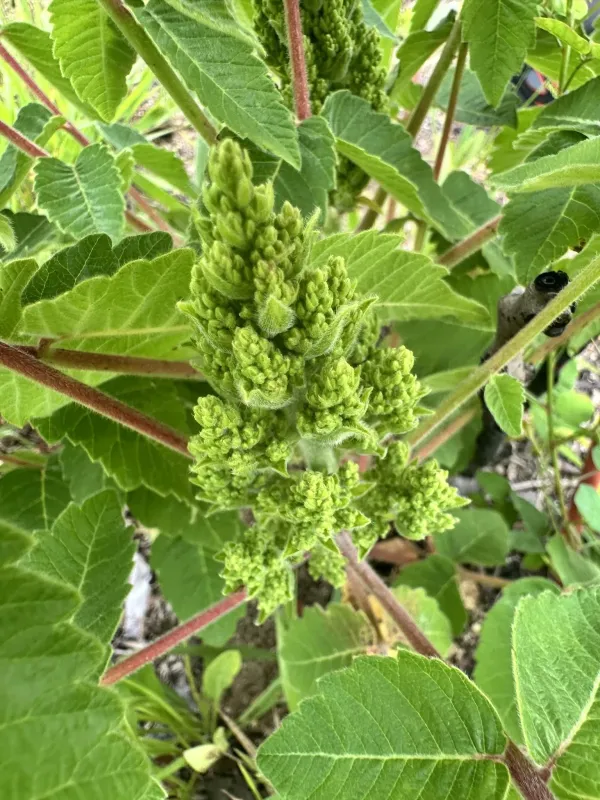
Michaux's sumac (Rhus michauxii) is a rare, deciduous shrub belonging to the Anacardiaceae family. The plant typically reaches heights of 0.5 to 1 meter and exhibits a colonial growth habit, spreading through an extensive root system to form dense thickets in its native environment.
The species is endemic to the southeastern United States, primarily found in North Carolina, South Carolina, Virginia, and Georgia. It is currently listed as an endangered species, emphasizing the importance of protection for its remaining natural habitats, which are often found on rocky, calcareous, or sandy soils.
Cultivation of this species requires well-drained soil conditions to prevent root rot. Michaux's sumac thrives in sites with full sunlight exposure and minimal competition from other aggressive vegetation. It is highly adapted to nutrient-poor soils and can withstand prolonged dry spells.
Climatic requirements involve moderate to warm conditions. While it is adapted to the temperate climate of the southeastern US, it requires specific light levels to initiate flowering and fruit production. Proper site selection is crucial for the development of healthy, vigorous plants in experimental trials.
Economically, this species is not used for commercial agricultural production due to its conservation status. Its value lies in botanical research, specifically regarding plant resilience to environmental stress, and in ecological restoration efforts aimed at preserving the biodiversity of the Piedmont region.
Main diseases and pests
The primary threat to the survival of Michaux's sumac is habitat destruction caused by land development and road construction. Furthermore, the absence of natural fire regimes in its native range has led to an increase in canopy cover, which shades out this sun-loving species and reduces its recruitment.
Disease pressure is largely associated with environmental factors, such as soil saturation. Excess moisture in the root zone can trigger fungal infections that lead to tissue decay. Maintaining proper drainage is the most effective management strategy to mitigate these pathogen risks.
Pest issues often involve generalist herbivores, such as aphids, which can infest the foliage during the growing season. While these pests can cause cosmetic damage, they rarely pose a terminal threat to established, healthy colonies of sumac in suitable environmental conditions.
Invasive plant species represent a significant challenge to the survival of Michaux's sumac. Non-native plants often grow faster and taller, effectively outcompeting the sumac for essential resources like sunlight, water, and available soil nutrients, leading to population decline.
Conservation management focuses on maintaining suitable open habitats. This involves periodic mechanical clearing or prescribed burning to mimic natural disturbance regimes, which encourages the growth of the rhizomes and ensures the long-term viability of the local populations.