
Shining sumac
Rhus copallinum
Description
Growing requirements
Shining sumac (Rhus copallinum) belongs to the Anacardiaceae family. It is a deciduous shrub or small tree native to North America, where it naturally grows in various conditions ranging from sandy soils to rocky slopes.
The plant prefers sunny locations, but it is capable of withstanding light shade. It is characterized by high drought tolerance, which makes it a promising crop for landscaping arid areas.
For normal development, sumac requires well-drained, fertile, or even poor sandy soils. An important requirement is the absence of waterlogging, as the root system is sensitive to excess moisture, which leads to root rot.
Climate requirements include moderate winter hardiness. The culture is capable of withstanding sub-zero temperatures, but in northern regions, young shoots may freeze during harsh winters, requiring the selection of wind-sheltered sites.
Agricultural maintenance involves pruning in early spring. The shrub has the ability to produce root suckers, so when cultivating it, it is necessary to control its spread throughout the area.
Main diseases and pests
The plant possesses natural immunity to most typical garden diseases, which simplifies its care. However, in high humidity, fungal infections such as powdery mildew can occur.
Among pests, the greatest threat is posed by leaf-eating insects and aphids. During dry periods, weakened specimens may attract various species of mites, which reduce the decorative appeal of the foliage.
Prevention includes maintaining proper spacing during planting to ensure air circulation within the canopy. In the event of a mass infestation, timely treatment with broad-spectrum insecticides is recommended.
It is important to monitor the overall health of the plants, as excess nitrogen fertilizers make the shoots more susceptible to sucking insects. It is recommended to use balanced fertilizers with a primary focus on potassium and phosphorus.
Overall, when following good cultivation practices, the shining sumac remains a fairly resilient plant that does not require significant expenditures on combatting phytopathogens.
Harvesting
The economic use of the shining sumac is multifaceted. First and foremost, the leaves and bark of the plant contain a high concentration of tannins, which is why they were traditionally collected for the leather industry for tanning hides.
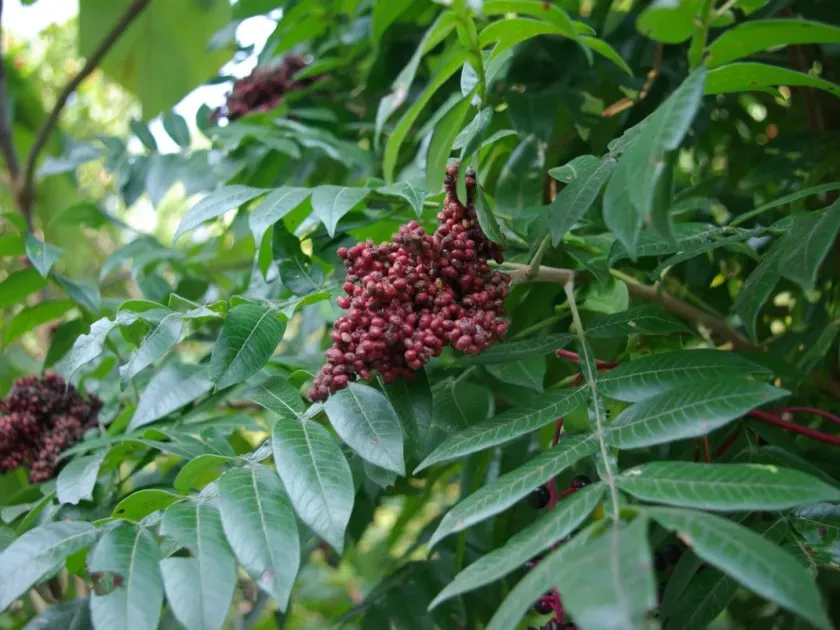
Sumac fruits, harvested after ripening, are used in the cuisine of many cultures as a sour spice. They provide a specific tart taste similar to lemon and are often used as an ingredient in spice blends.
In landscape design, the crop is valued for its vibrant autumn foliage, which turns into rich crimson and red shades. This makes the plant a popular choice for creating hedges and group plantings.
The harvest of fruits is carried out in dry weather when the inflorescences acquire their characteristic dark red color. After harvest, the fruits are carefully dried and ground, then stored in airtight containers to prevent the loss of essential oils.
The ecological significance of sumac lies in its ability to stabilize slopes due to its well-developed root system. It is often planted on eroded soils to prevent landslides and soil erosion.