
Mangifera timorensis
Mangifera timorensis
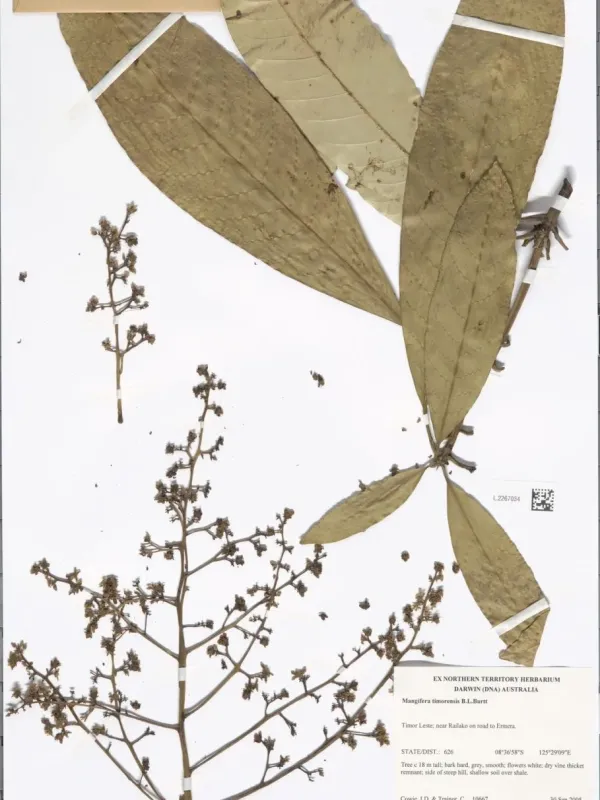
Description
Growing requirements
Mangifera timorensis is a tropical tree species belonging to the Anacardiaceae family. While part of the same genus as the popular mango, it is primarily recognized for its biological uniqueness and specific role within the ecosystems of the Lesser Sunda Islands.
The species originates from the Timor region, thriving in tropical monsoon climates. It requires consistent warmth throughout the year, as it lacks the cold-hardiness necessary to withstand temperatures below tropical minimums.
Regarding soil requirements, the tree performs best in deep, well-drained loamy soils. It is sensitive to waterlogging, which can lead to root system decay, making proper soil selection and drainage installation crucial for successful establishment.
The species demands a high level of sun exposure to stimulate photosynthetic activity and vertical development. In its native habitat, it competes for light in the canopy layer, which influences its structural development and timber density.
Agrotechnical management includes periodic thinning of competing vegetation around the saplings to ensure adequate nutrient access and to prevent pathogens that thrive in dense, poorly ventilated forest understories.
Harvesting
The primary economic focus for this species is timber production. The wood is dense and possesses a distinctive grain pattern, making it a desirable resource for high-end cabinetry and artisanal woodcraft in its native range.
Harvesting techniques require sustainable forest management practices. Selective logging is preferred to maintain the ecological balance and ensure the long-term survival of this species in its natural range.
Post-harvest processing involves controlled kiln drying to ensure the timber reaches the equilibrium moisture content, which is vital for minimizing warping and splitting in the finished furniture products.
While the fruits are not the main commercial product, research into the phytochemical properties of this species continues, as it may hold potential for future applications in forestry-related industries.
- Durable and aesthetic wood quality
- High demand in local woodworking markets
- Slow-growth patterns requiring long-term planning
- Potential for sustainable agroforestry integration