
Mangifera quadrifida
Mangifera quadrifida
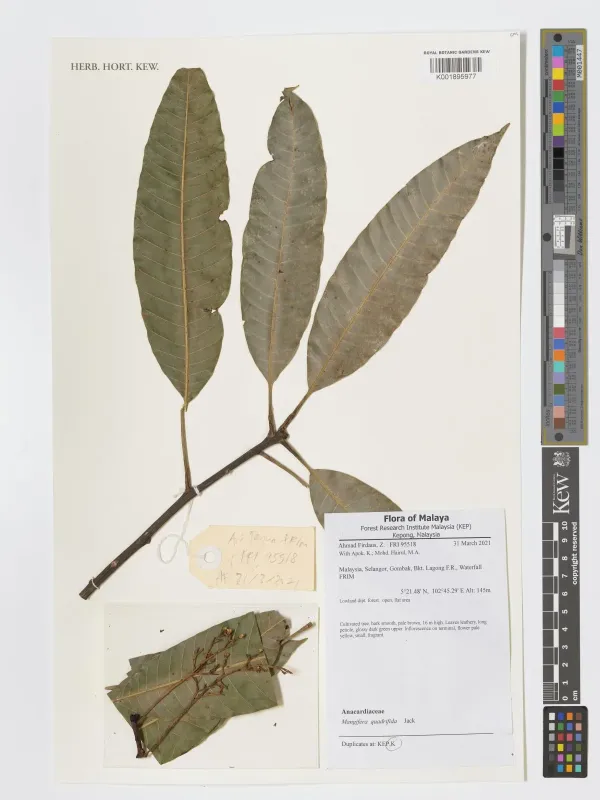
Description
Sowing dates
Mangifera quadrifida is a distinct species belonging to the Anacardiaceae family, closely related to the commercially known mango tree.
Propagation is primarily achieved through seeds, which require immediate sowing after extraction from the fruit to maintain their viability.
The seeds are sensitive to desiccation and should be placed in a loose, well-draining organic medium to facilitate successful germination.
In nursery settings, it is crucial to maintain high humidity levels and consistent moisture for the newly sprouted seedlings to establish.
Timing the sowing process just before the rainy season allows the root system to develop adequately, ensuring resilience against future environmental stresses.
Growing requirements
This species thrives in a warm, tropical climate and requires consistent high temperatures throughout the year to support active growth.
Ideal soil conditions consist of deep, fertile, and well-drained alluvial or loam soils with a neutral to slightly acidic pH level.
Being a photophilous plant, Mangifera quadrifida requires full sun exposure; shaded environments result in stunted growth and poor fruit set.
Adequate spacing between trees is necessary to ensure proper airflow, which is vital for preventing the development of humidity-related pathogens.
While the tree can survive short dry periods, regular watering is recommended during the flowering and fruit development stages to maximize yield.
Yield
The tree typically enters its productive phase within 5 to 7 years after being transplanted to its permanent cultivation site.
The fruit is characterized by its fibrous flesh and potent aroma, making it a valuable resource for traditional culinary applications in its native region.
Yield consistency is highly dependent on managing environmental factors and providing essential nutrients to the trees during the vegetative phase.
Apart from fruit production, the wood of this tree is valued for its durability and is utilized in localized small-scale woodworking projects.
Strategic pruning practices help maintain a manageable tree size and concentrate the plant's energy toward fruit development rather than excessive foliage.
Main diseases and pests
Anthracnose remains the most significant pathological threat, frequently attacking leaves, flowers, and developing fruits during wet seasons.
Pest management focuses primarily on controlling fruit flies and various sap-sucking insects that weaken the overall structure of the canopy.
Powdery mildew can become an issue if the planting density is too high, leading to insufficient air circulation and trapping moisture.
Effective pest and disease control requires proactive monitoring and the removal of any diseased plant tissue to prevent cross-contamination.
- Anthracnose
- Fruit flies
- Powdery mildew
- Scale insects
Harvesting
Harvesting is conducted manually when fruits exhibit the appropriate color and scent markers associated with biological maturity.
Care must be taken to harvest with caution, ensuring the stems are cleanly cut to minimize the risk of mechanical damage and subsequent decay.
Post-harvest handling is critical as the fruits are perishable; prompt transport and storage in ventilated conditions are recommended.
Proper sorting and grading help isolate high-quality produce, ensuring that only healthy fruits reach the point of distribution or processing.
Maintaining a clean orchard floor after harvest is essential to reduce the habitat for pests that could affect the subsequent growing season.